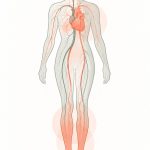
You feel lightheaded when you stand, have brain fog, palpitations, exercise intolerance, fatigue, and headaches. If your general practitioner is knowledgeable (and that’s a big “if”) they give you a referral to a specialist who runs appropriate testing to see if you have postural orthostatic tachycardia syndrome (POTS). Your tilt table test may suggest too […]

When people think about the body systems affected by Ehlers-Danlos Syndrome (EDS), the voice box probably isn’t one of the first things that comes to mind. People with EDS often learn that connective tissue plays a role in far more parts of the body than they initially realized, and yet they may still be surprised […]

Ehlers-Danlos Syndrome (EDS) is a complex chronic condition that for many patients comes with some level of disability. It also often comes with other comorbidities (health conditions that occur alongside a primary diagnosis) such as dysautonomia or mast cell activation syndrome (MCAS). As there are 13 types of EDS and symptoms often manifest differently in […]

There is exciting news for the recently reported 17% of hEDS patients and 14.7% of HSD patients who experience polycystic ovary syndrome, now renamed to polyendocrine metabolic ovarian syndrome. On May 12th, 2026, a new article was published in The Lancet announcing the name change from polycystic ovary syndrome (PCOS) to polyendocrine metabolic […]

This article explores the history and current research surrounding visceroptosis, a condition involving the downward displacement of internal organs. While some forms of organ prolapse, such as rectal and pelvic organ prolapse, are already recognized features of Hypermobile Ehlers-Danlos syndrome (hEDS), the possibility that connective tissue laxity may also affect organs higher in the abdomen […]

This article explores whether upright MRI may be a useful tool for evaluating EDS-related spinal instability. Understanding the limitations of standard MRI and what positional imaging could offer instead, may help patients, clinicians, researchers, advocates, and healthcare providers better navigate the complex neurosurgical landscape of EDS. Why Supine MRI May Miss the Problem Cervical […]

If you are among the many people with Ehlers-Danlos syndrome (EDS) who also have dysautonomia, summer can feel less like a season to enjoy and more like something to survive. Research suggests that dysautonomia affects approximately 80% of people with hypermobile EDS, making it one of the most common comorbidities associated with the condition. For […]

Celebrating My Two-Year Stoma-Versary I used to feel like I couldn’t say, “my ostomy bag saved my life,” because I didn’t get my ostomy bag for the same reasons a lot of people do. Some of the most common reasons people need ostomies are for inflammatory bowel disease (IBD), acute infections like diverticulitis, or colon […]

Ehlers-Danlos Syndrome May Increase Susceptibility to Infections
EDS, POTS and MCAS Linked by One Gene Mutation

Popular People With Ehlers-Danlos Syndrome

In memory of John Ferman, Founder and President of Chronic Pain Partners / EDS Awareness
EDS Physical Therapy Book & Free Webinar: “Living Life to the Fullest with Ehlers-Danlos Syndrome”