Beyond the Myths: Four People Talk About the Reality of Living With EDS & HSD

We wanted to end EDS Awareness Month by spotlighting the lived experiences of four individuals with Ehlers-Danlos Syndrome (EDS) or Hypermobility Spectrum Disorder (HSD). Through these perspectives, we aimed to tackle a few of the many myths surrounding these conditions. We also wanted to offer a glimpse into the reality of living with EDS/HSD, including the actual hours spent managing symptoms related to these conditions and their often numerous comorbidities. We hope this brief window into life with EDS/HSD helps members of our community feel more seen while also fostering greater understanding among loved ones and the broader community.


Myth: “Men Can’t Have EDS”

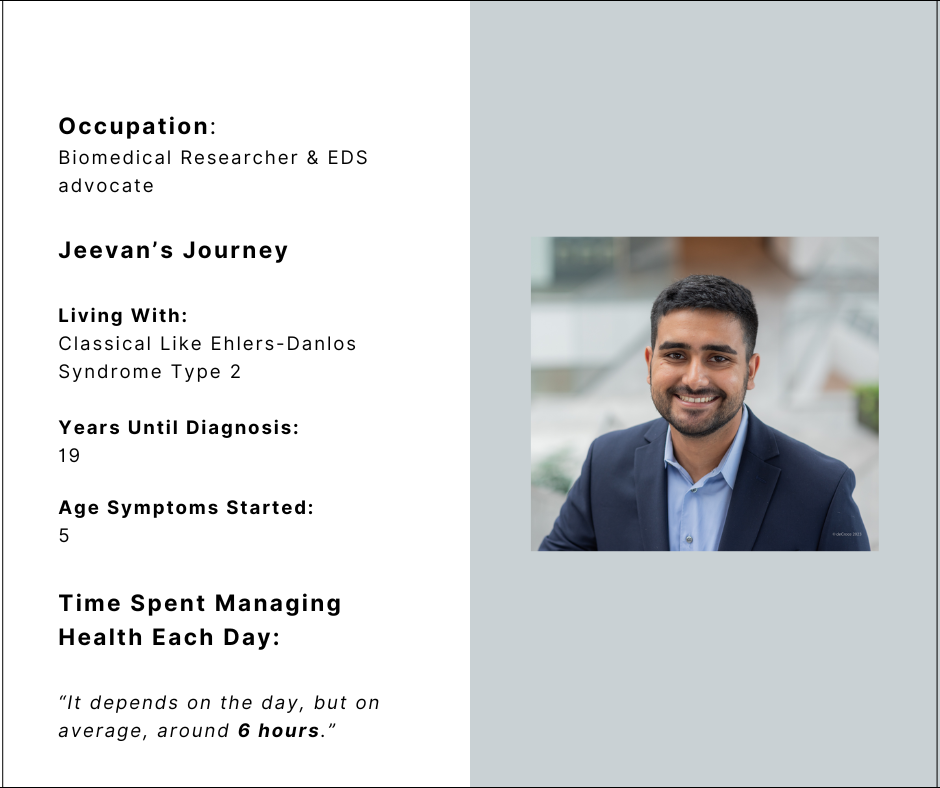
Meet: Jeevan Mann
Meet Jeevan Mann
Occupation: 
Biomedical Researcher & EDS advocate

Jeevan’s Journey

Living With:
Classical Like Ehlers-Danlos Syndrome Type 2

Years Until Diagnosis:
19

Age Symptoms Started:
5


Time Spent Managing Health Each Day: 

“It depends on the day, but on average, around 6 hours.”

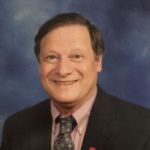
(Professional headshot of Jeevan Mann smiling outdoors, wearing a navy blazer and light blue button-down shirt against a softly blurred background.)
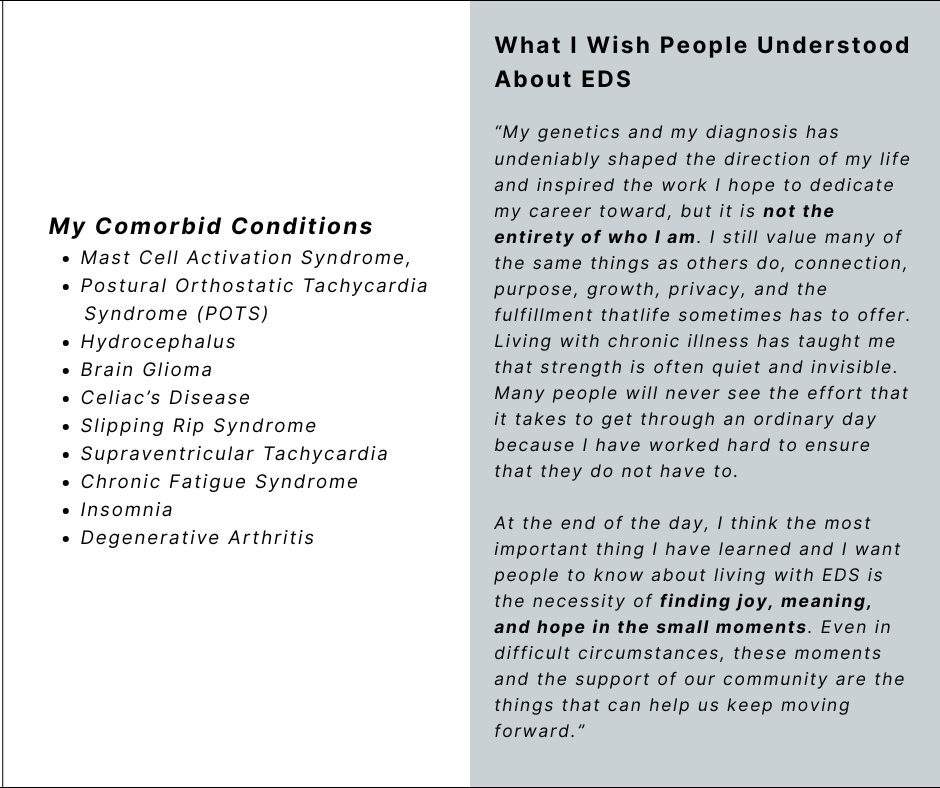
My Comorbid Conditions
Mast Cell Activation Syndrome, 
Postural Orthostatic Tachycardia
     Syndrome (POTS)
Hydrocephalus 
Brain Glioma 
Celiac’s Disease
Slipping Rip Syndrome
Supraventricular Tachycardia 
Chronic Fatigue Syndrome
Insomnia
Degenerative Arthritis

What I Wish People Understood About EDS

“My genetics and my diagnosis has undeniably shaped the direction of my life and inspired the work I hope to dedicate my career toward, but it is not the entirety of who I am. I still value many of the same things as others do, connection, purpose, growth, privacy, and the fulfillment thatlife sometimes has to offer. Living with chronic illness has taught me that strength is often quiet and invisible. Many people will never see the effort that it takes to get through an ordinary day because I have worked hard to ensure that they do not have to. 

At the end of the day, I think the most important thing I have learned and I want people to know about living with EDS is the necessity of finding joy, meaning, and hope in the small moments. Even in difficult circumstances, these moments and the support of our community are the things that can help us keep moving forward.”
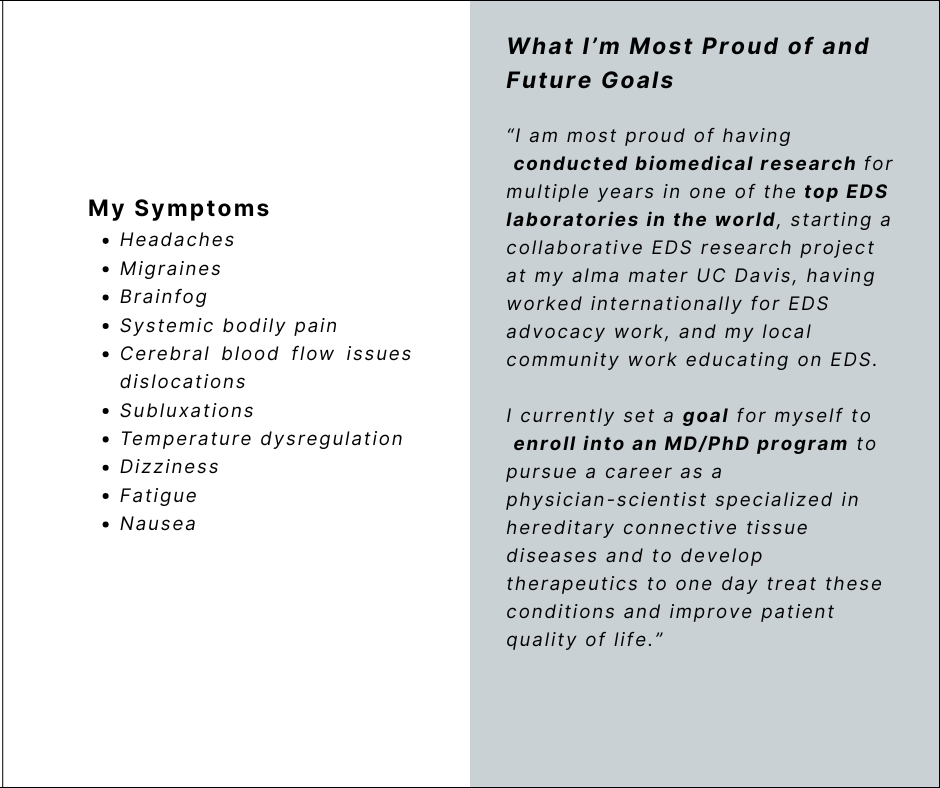
My Symptoms
Headaches
Migraines 
Brainfog 
Systemic bodily pain 
Cerebral blood flow issues dislocations 
Subluxations
Temperature dysregulation 
Dizziness 
Fatigue 
Nausea

What I’m Most Proud of and Future Goals

“I am most proud of having conducted biomedical research for multiple years in one of the top EDS laboratories in the world, starting a collaborative EDS research project at my alma mater UC Davis, having worked internationally for EDS advocacy work, and my localcommunity work educating on EDS. 

I currently set a goal for myself to enroll into an MD/PhD program to pursue a career as a 
physician-scientist specialized in hereditary connective tissue diseases and to develop therapeutics to one day treat these conditions and improve patient quality of life.”

Myth: “EDS Doesn’t Affect People From All Backgrounds”

Meet: Kaleena Deshawn

Kaleena’s Journey

Living With:
Hypermobile Ehlers-Danlos Syndrome (hEDS)

Years Until Diagnosis:
24

Age Symptoms Started:
“I've always had symptoms. I had my first neck x-ray at 5, but things started to get really debilitating on a daily basis around 23.”

Time Spent Managing Health Each Day: 
“It's an all-day activity. There's nothing I can do throughout the day without considering my health: how many breaks do I need to take, how long can I manage, how much rest do I need before and after? It's been my full-time job for the last decade. [Because of this], I am unable to work.”

(Portrait of Kaleena Deshawn outdoors wearing colorful braided hair and bold green makeup, smiling slightly while wearing a green Ehlers-Danlos Syndrome awareness T-shirt with awareness ribbon graphics and text about chronic illness experiences.)
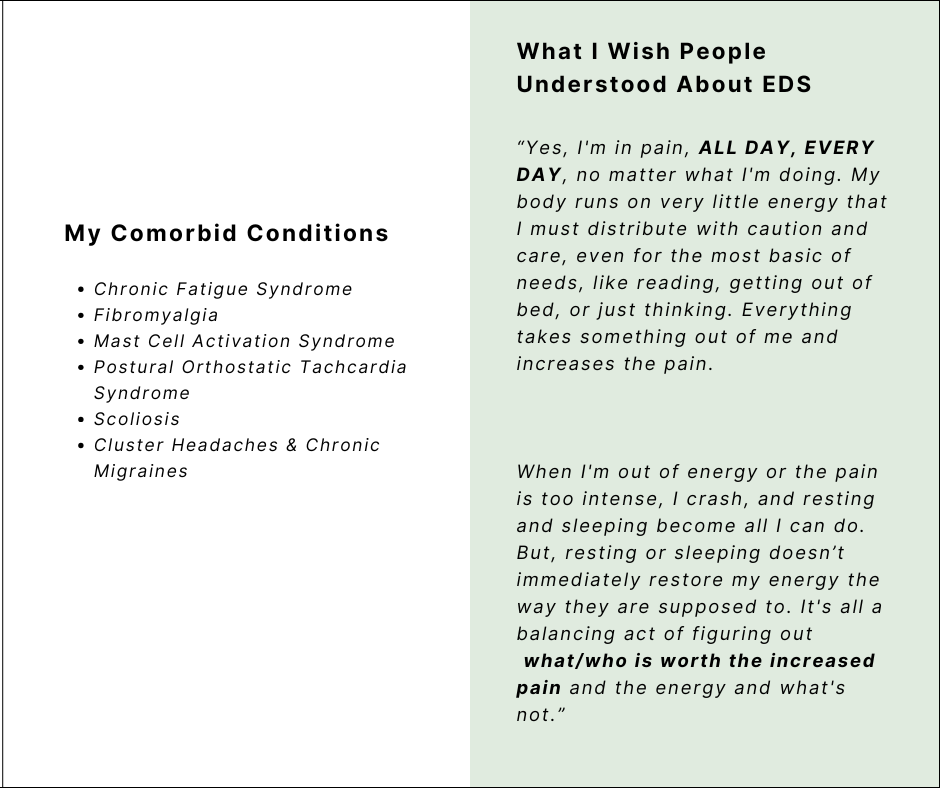
My Comorbid Conditions

Chronic Fatigue Syndrome
Fibromyalgia 
Mast Cell Activation Syndrome 
Postural Orthostatic Tachcardia Syndrome
Scoliosis
Cluster Headaches & Chronic Migraines

What I Wish People Understood About EDS

“Yes, I'm in pain, ALL DAY, EVERY DAY, no matter what I'm doing. My body runs on very little energy that I must distribute with caution and care, even for the most basic of needs, like reading, getting out of bed, or just thinking. Everything takes something out of me and increases the pain.


When I'm out of energy or the pain is too intense, I crash, and resting and sleeping become all I can do. But, resting or sleeping doesn’t immediately restore my energy the way they are supposed to. It's all a balancing act of figuring out what/who is worth the increased pain and the energy and what's not.”
My Daily Symptoms

Headache
Lightheadedness 
All over body pain 
Brain fog 
Weakness 
Extreme Fatigue 
Post exertional malaise 
Subluxations 
Tachycardia 
GI issues 
Temperature regulation issues
Insomnia/painsomnia

Why Representation Matters in EDS
“Initially, going into [support groups] was a very white space, and there was this notion that Black people wouldn’t have EDS because it’s a European disease. If my doctor gives me this diagnosis, it’s weird to have some random lady tell me otherwise. 


Trying to get a diagnosis or figuring out what’s going on is already hard enough, but then to go into a space where people are supposed to support you, but instead, you get more people denying your experience, that doesn’t feel good. It’s unsettling. It’s the opposite of what a support group is supposed to do.”
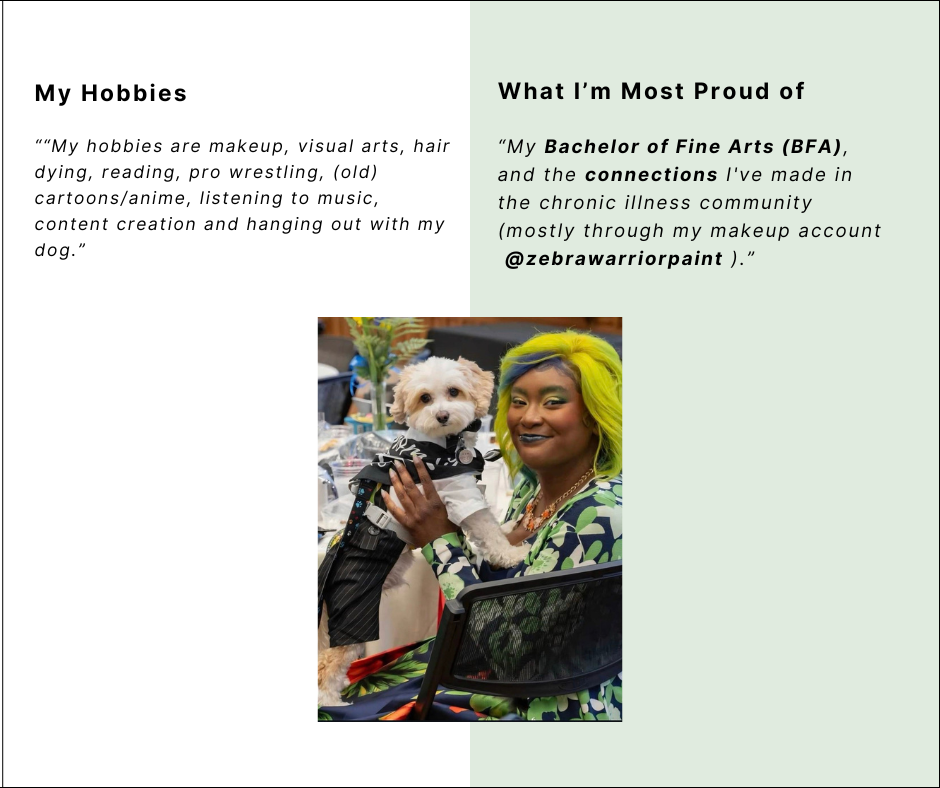
My Hobbies

““My hobbies are makeup, visual arts, hair dying, reading, pro wrestling, (old) cartoons/anime, listening to music, content creation and hanging out with my dog.”

What I’m Most Proud of

“My Bachelor of Fine Arts (BFA), and the connections I've made in the chronic illness community (mostly through my makeup account @zebrawarriorpaint ).”

(Portrait of Aleena Deshawn smiling while holding a small fluffy dog dressed in a black-and-white outfit. Aleena has bright neon green and blue hair, bold green-and-blue makeup, and is wearing a patterned outfit while seated indoors at a social gathering.)

Myth: “EDS is Just Being a Bit ‘Bendy'”

Meet: Krista Brack
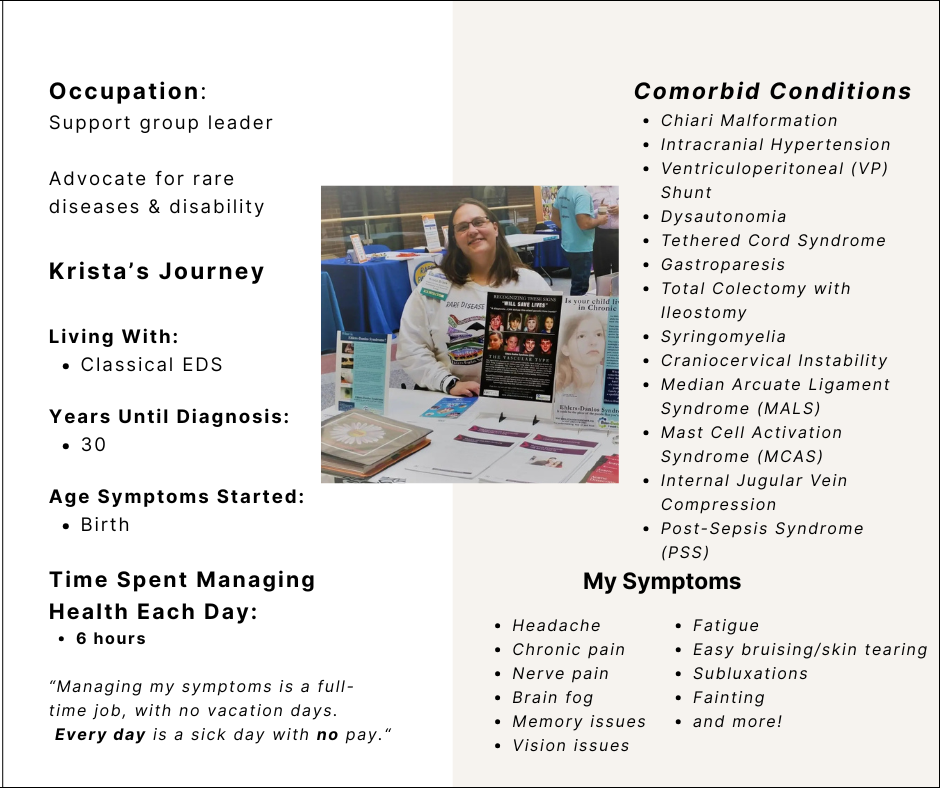
Occupation: 
Support group leader 

Advocate for rare 
diseases & disability

Krista’s Journey

Living With:
Classical EDS

Years Until Diagnosis:
30

Age Symptoms Started:
Birth

Time Spent Managing Health Each Day: 
6 hours

“Managing my symptoms is a full-time job, with no vacation days. Every day is a sick day with no pay.“

Comorbid Conditions
Chiari Malformation
Intracranial Hypertension
Ventriculoperitoneal (VP) Shunt
Dysautonomia
Tethered Cord Syndrome
Gastroparesis
Total Colectomy with Ileostomy
Syringomyelia
Craniocervical Instability
Median Arcuate Ligament Syndrome (MALS)
Mast Cell Activation Syndrome (MCAS)
Internal Jugular Vein Compression
Post-Sepsis Syndrome (PSS)

My Symptoms:


Headache
Chronic pain 
Nerve pain
Brain fog 
Memory issues
Vision issues


Fatigue
Easy bruising/skin tearing 
Subluxations 
Fainting 
and more!
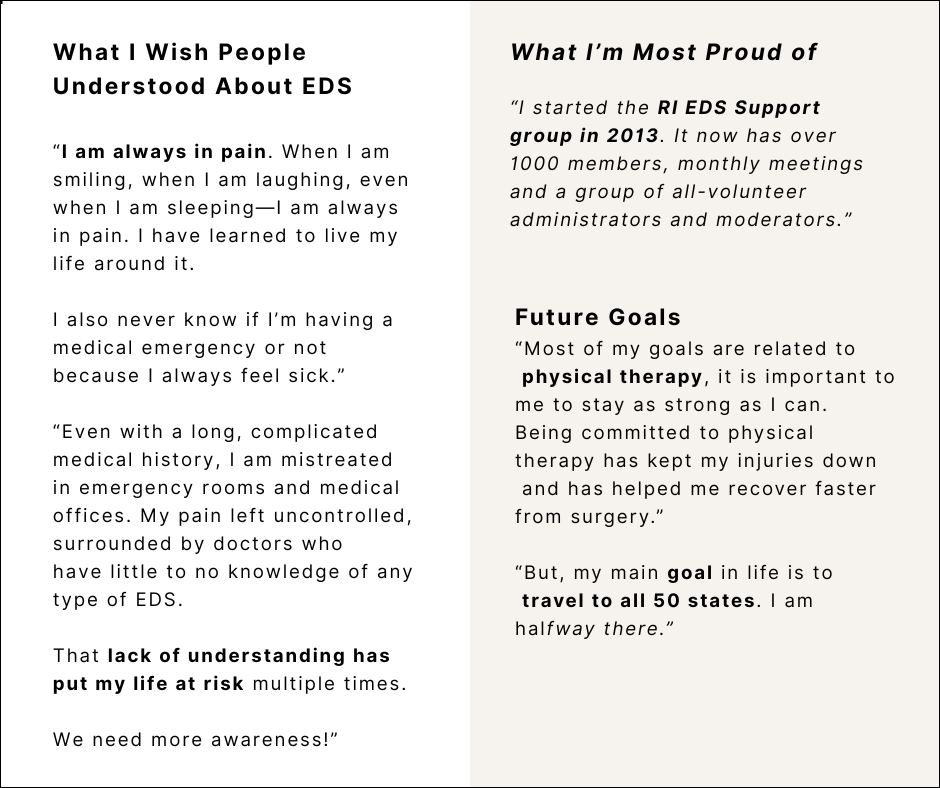
What I Wish People Understood About EDS

“I am always in pain. When I am smiling, when I am laughing, even when I am sleeping—I am always in pain. I have learned to live my life around it.

I also never know if I’m having a medical emergency or not because I always feel sick.”

“Even with a long, complicated medical history, I am mistreated in emergency rooms and medical offices. My pain left uncontrolled, surrounded by doctors who
have little to no knowledge of any type of EDS. 

That lack of understanding has put my life at risk multiple times. 

We need more awareness!”


What I’m Most Proud of

“I started the RI EDS Support group in 2013. It now has over 1000 members, monthly meetings and a group of all-volunteer administrators and moderators.”


Future Goals
“Most of my goals are related to physical therapy, it is important to me to stay as strong as I can. Being committed to physical therapy has kept my injuries down and has helped me recover faster from surgery.”

“But, my main goal in life is to travel to all 50 states. I am halfway there.”

Myth: “If You Were Actually Sick You Would Look Sick”

Meet: Jacqueline Teti
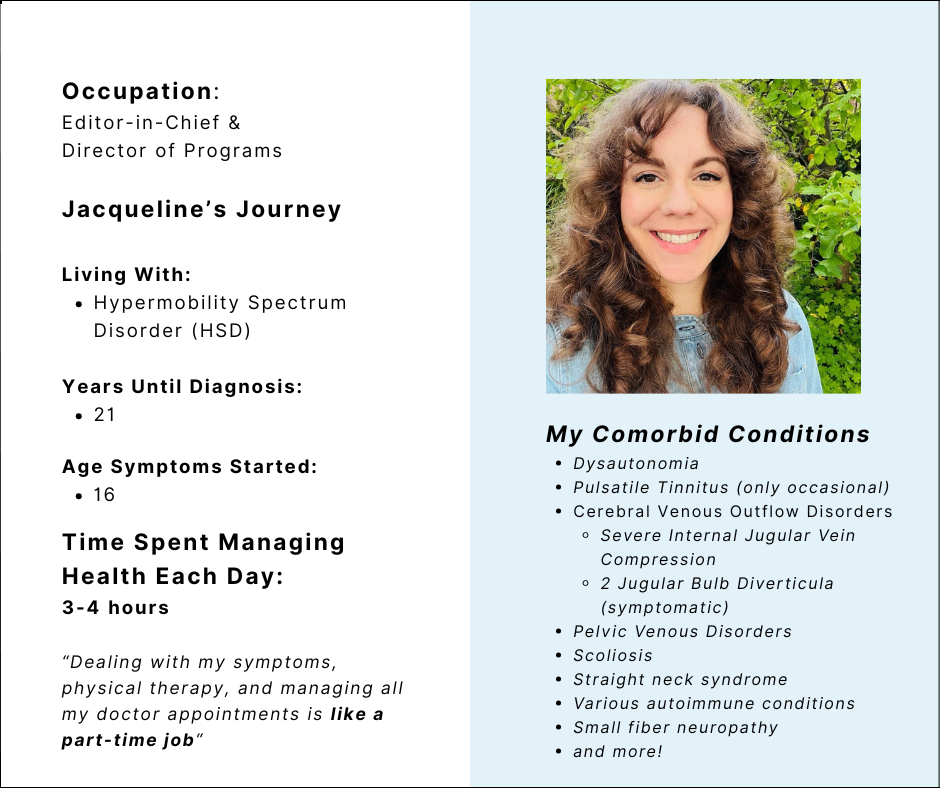


(Portrait of Jacqueline Teti wearing a blue jean dress with large brown curls, smiling against a green leafy background)

Occupation: 
Editor-in-Chief &
Director of Programs

Jacqueline’s Journey

Living With:
Hypermobility Spectrum Disorder (HSD)

Years Until Diagnosis:
21

Age Symptoms Started:
16


Time Spent Managing Health Each Day: 
3-4 hours

“Dealing with my symptoms, physical therapy, and managing all my doctor appointments is like a part-time job“

My Comorbid Conditions
Dysautonomia
Pulsatile Tinnitus (only occasional)
Cerebral Venous Outflow Disorders
Severe Internal Jugular Vein Compression
2 Jugular Bulb Diverticula (symptomatic)
Pelvic Venous Disorders
Scoliosis
Straight neck syndrome
Various autoimmune conditions
Small fiber neuropathy
and more!
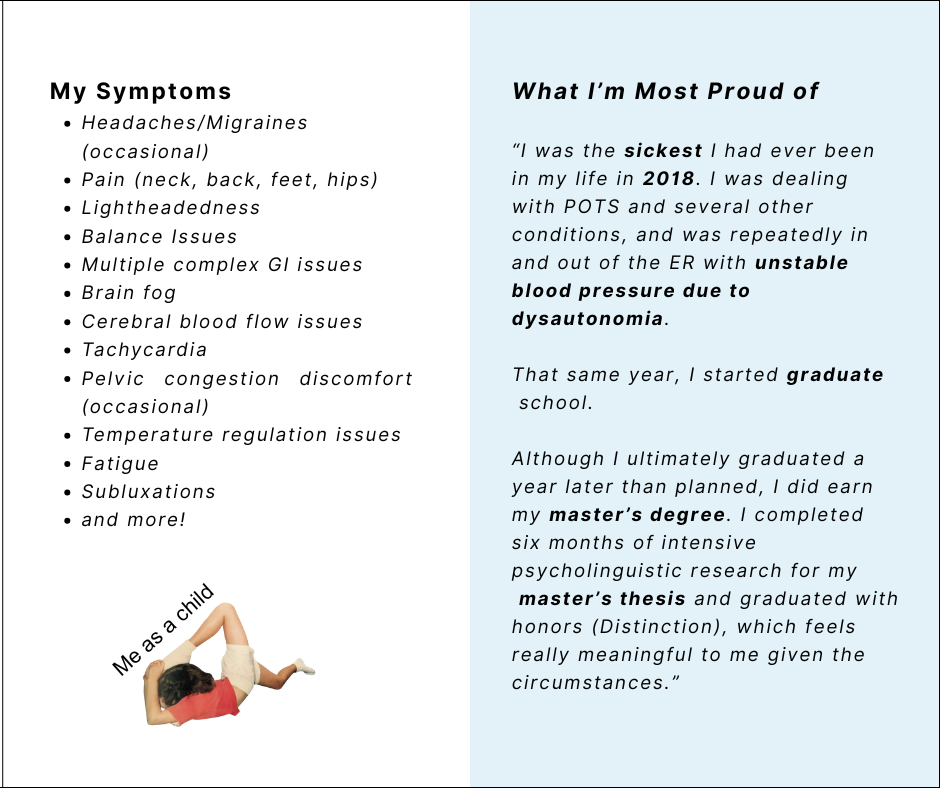
My Symptoms
Headaches/Migraines (occasional)
Pain (neck, back, feet, hips)
Lightheadedness
Balance Issues 
Multiple complex GI issues
Brain fog
Cerebral blood flow issues 
Tachycardia 
Pelvic congestion discomfort (occasional) 
Temperature regulation issues
Fatigue
Subluxations 
and more!

What I’m Most Proud of

“I was the sickest I had ever been in my life in 2018. I was dealing with POTS and several other conditions, and was repeatedly in and out of the ER with unstable blood pressure due to dysautonomia.

That same year, I started graduate school.

Although I ultimately graduated a year later than planned, I did earn my master’s degree. I completed six months of intensive psycholinguistic research for my master’s thesis and graduated with honors (Distinction), which feels really meaningful to me given the circumstances.”

Jacqueline Teti, author

Editor-in-Chief &

Director of Programs

May, 2026

Leave a Reply