
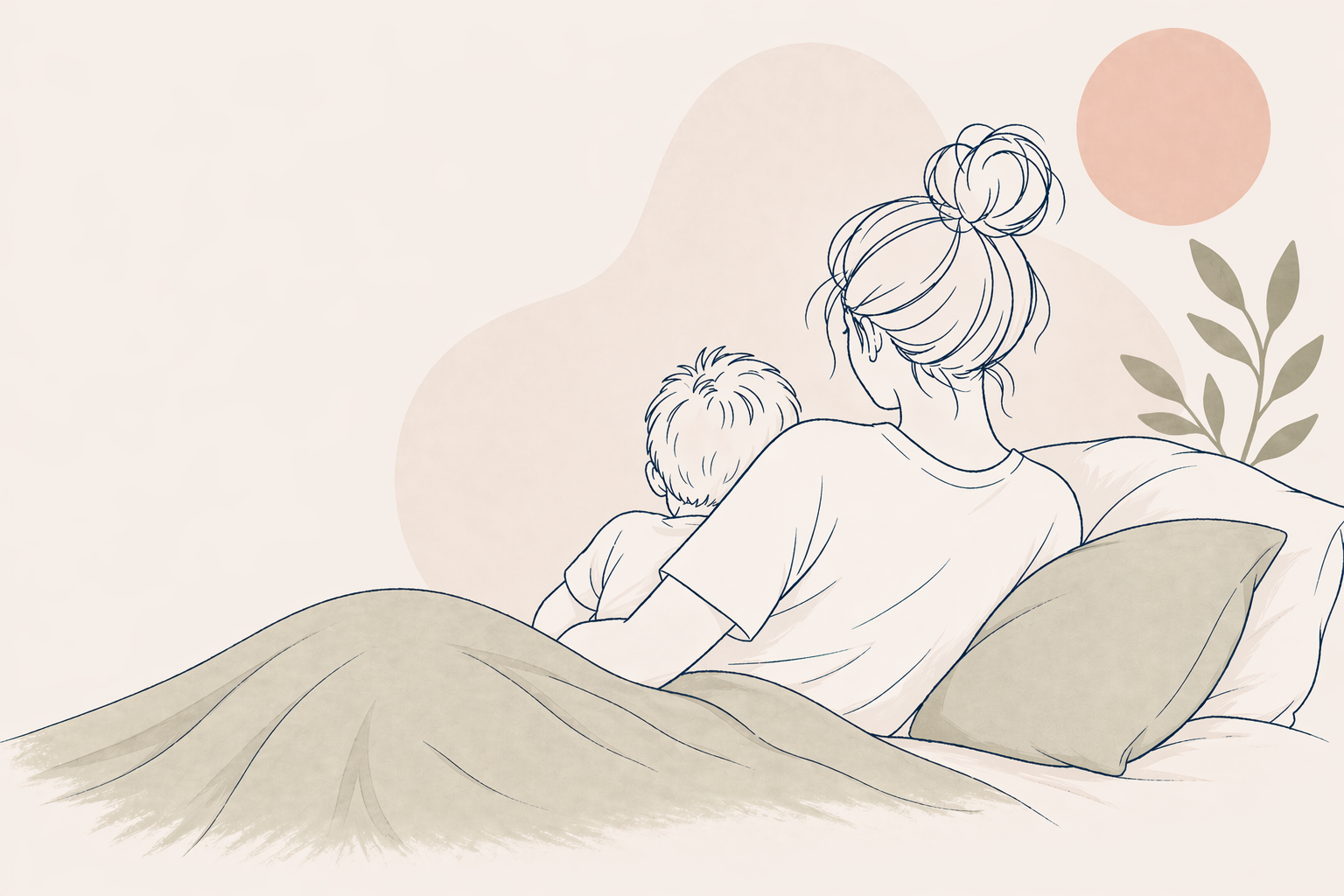
I live with Ehlers-Danlos Syndrome (EDS), Postural Orthostatic Tachycardia Syndrome (POTS), mast cell activation syndrome (MCAS), and Sjogren’s. Over the years, I’ve undergone more than 40 surgeries, including spinal fusions and brain surgery, many performed while raising my son alone.
My son was born 11 weeks early and spent 63 days in the NICU. We were finally sent home the very week the pandemic was announced. Only eight months later, I had to face a surgical procedure known as a Occipitocervical fusion. I spent that recovery living in a neck brace, learning to care for a newborn while lying down. There is no manual for recovering from this kind of major surgery with a small baby during a global lockdown. I wrote the one I wish I’d had.
1. Presence Over Perfection
I’ve learned that being a “good” parent doesn’t always mean having a clean home or a four-course meal; it means prioritizing connection and care over perfection. I had to learn radical acceptance for “pajama days” and to let non-essential tasks, like dishes, wait so I could preserve my limited energy for my child.
I learned this in the NICU while recovering from a traumatic birth, a blood clot, and emergency kidney stone surgery. I was devastated because I couldn’t breastfeed, but a lactation consultant told me: “He won’t remember breastmilk or formula; he will remember whether you were present.” If switching to formula meant I had more energy to spend with him, that was the better choice for us. This conversation became the framework for every hard decision that followed.
2. Engineering the Environment
As someone with EDS and POTS recovering from surgery, I restructured my home to minimize “vertical” tasks so I could parent lying down while healing. I also did prep work to ensure meals were low-stress.
- Horizontal Parenting: I placed mattress toppers and rugs on the floor to create cushioned spaces where I could lie down while my son played safely next to me. I learned also that most of his feeding, dressing, and changing needs could largely be done lying flat.
- Prepped Bins: Another “Zebra mom” taught me to keep lidded bins in every room. I filled them with snacks, drinks, diapers, and post-op supplies so I never had to leave the room.
- Note on Safety: Always ensure all medications and sharp medical supplies are kept in securely locked, child-proof containers within these bins.
- Low-Energy Engagement: We used bubbles, sensory toys, mini trampolines, and even a spinning chair to provide regulation when we couldn’t leave the house. On days when reading books was too physically difficult, I found YouTube videos of other people reading aloud so we could still bond over a story.
- Freezing Food on Good Days: I used Souper Cubes to freeze pre-fixed meals for days I felt my worst.
- Easy Mornings: I placed pre-made breakfast items in tall food prep containers in the fridge the night before. This setup reduced the need for sudden movement in the morning, allowing me to ease into the day at a safer pace during recovery periods.
3. Designing for Autonomy
As my son grew, teaching him independent skills wasn’t just a parenting goal; it was a survival necessity. This is a unique challenge with a medically complex autistic child, but shifting our home to be a space that safely fosters independence made a huge difference.
- Helpful Hacks: We switched to leak-proof cups with straws and used spinning makeup containers in the bathroom to keep toothbrushes and toothpaste at an accessible level. With these small changes, I encouraged him to navigate his own hygiene while I remained horizontal.
4. Explaining Illness Early
When my son was younger, it was hard on me emotionally to be gone during surgery. The strain of being away and completely unable to be a part of his life was rough. I spent many, many nights crying in the hospital and feeling frustrated with myself for not improving more quickly. As he got older and began to understand that I would be away, it got a lot harder on both of us.
As kids often interpret a parent’s physical limitations through their own lens, they may wonder if Mom is going to be okay, or if the situation is somehow their fault. Emotional outbursts can also occur when things feel so uncertain to them. I learned it was best for our family to lead with honesty and to pause and regulate myself before responding to his frustration.
- Fact-Based Honesty: Answer questions with facts. It’s okay to say, “After surgery, Mommy might hurt for a little while, but it will help her feel better.”
- Visual Stories: We used books like The Invisible String and Mommy Can’t Dance to help explain separation and my physical limitations in a way he could understand.
5. Building Your Village: Don’t Wait Until You Are ‘Well’
The pandemic stripped away whatever village I had. As a disabled single mom, I had to build mine intentionally. Surrounding yourself with local parents, friends, neighbors, anyone you can lean on during difficult days, is vital. It can be hard to put yourself out there when you’re already feeling incredibly vulnerable, but it makes a difference. People will surprise you.
- Where to Find Your People: Reach out on social media or join local groups, they are a great way to get to know your neighborhood. Church, school, and nonprofits are other vital resources. For me, online EDS and chronic illness parenting groups provided a space where people truly understood my daily reality.
- The Power of Listening: Not everyone can provide every type of support you need, but sometimes just having someone to listen for an hour makes a huge difference.
- The “Specific Ask” Shift: I learned to ask for help specifically rather than generally. Instead of saying “I need help,” I would ask, “Can you bring a meal on Tuesday?” or “Can you sit with my son for an hour while I rest?” Changing how I asked entirely changed the quality of help I received.
There is no perfect version of disabled parenting. The fact that you struggle with “not being enough” only proves how deeply you care. The goal is presence, not performance. The fact that you keep showing up, even from the floor, is what your child will remember.
Katie Zinno, author
Patient Advocate
Disclaimer: This article reflects the personal experiences of the author and is intended for informational and supportive purposes only. It is not medical, parenting, or professional advice, nor does it endorse any specific products. Caregivers should always use appropriate supervision and ensure safety when applying any strategies described. Readers should consult their healthcare providers before making decisions related to their health, treatment, or caregiving practices.