jteti

A Thank You to Karina Sturm for Her Leadership at Chronic Pain Partners
We want to share our sincere thanks to Karina Sturm as she steps down from her role as Editor-in-Chief at Chronic Pain Partners. Karina’s drive and mission have always been deeply personal, shaped by her own journey with EDS and invisible disability. Since joining us in 2019, Karina has poured her heart and soul into […]

Up Close and Personal: Our Team’s Favorite Go-To Support Aids for EDS/HSD
This month, we wanted to give you a peek into the daily lives of our team members by asking them to share a few of their favorite go-to supportive items for Ehlers-Danlos syndromes (EDS) or hypermobility spectrum disorders (HSD). While these aids might be what work for us personally, we hope they offer inspiration and ideas to help you live your life to the fullest with EDS/HSD.

Schroth Therapy: An Expert Q&A on Scoliosis Care in EDS
Scoliosis and Ehlers-Danlos Syndrome (EDS) frequently go hand-in-hand. In this article, we cover the essentials of scoliosis and its prevalence in the EDS community. Next, we spotlight a highly regarded yet lesser-known approach for treating scoliosis called the Schroth Method. To help you decide if it is right for you, we caught up with Schroth-certified […]

New App Can Help Screen for EDS
The Hypermobility Assessment Tool (HAT) app empowers patients who suspect they have EDS by putting the first steps of the screening process directly into their hands.

The Hidden Disabilities Sunflower Lanyard: Making the Invisible Visible
The Hidden Disabilities Sunflower lanyard can help patients with EDS signal to others that they may need extra understanding, support, or time in workplaces, shops, or other public spaces.

Update On Gene Linked to Hypermobile EDS
A new study, led by Dr. Cortney Gensemer, marks a genetic breakthrough in hEDS research. The KLK15 variant (p.Gly226Asp) has been identified as a direct disease-causing gene in hypermobile EDS, causing connective tissue dysfunction and immune system dysregulation.
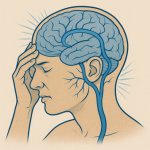
Cerebral Venous Outflow Disorders: What it is and Why EDS Patients Should Know About it
Cerebral venous outflow disorders describes a spectrum of conditions related to issues with how fluid drains from the brain.Experts are observing a connection between connective tissue disorders (like hypermobile EDS) and cerebral venous outflow disorders. Cerebral venous outflow disorders can cause pressure headaches (that often worsen when lying flat), dizziness, pulsatile tinnitus (a rare vascular form of tinnitus), neck pain, tenderness at the base of skull, vision disturbances, ‘brain fog’, and cognitive dysfunction. Cerebral venous outflow disorder may look different when it presents in individuals with connective tissue disorders than in individuals without, creating diagnostic challenges.