This month, we wanted to give you a peek into the daily lives of our team members by asking them to share a few of their favorite go-to supportive items for Ehlers-Danlos syndromes (EDS) or hypermobility spectrum disorders (HSD). While these aids might be what work for us personally, we hope they offer inspiration and ideas to help you live your life to the fullest with EDS/HSD.
Favorite Pick #1: Recumbent Bike
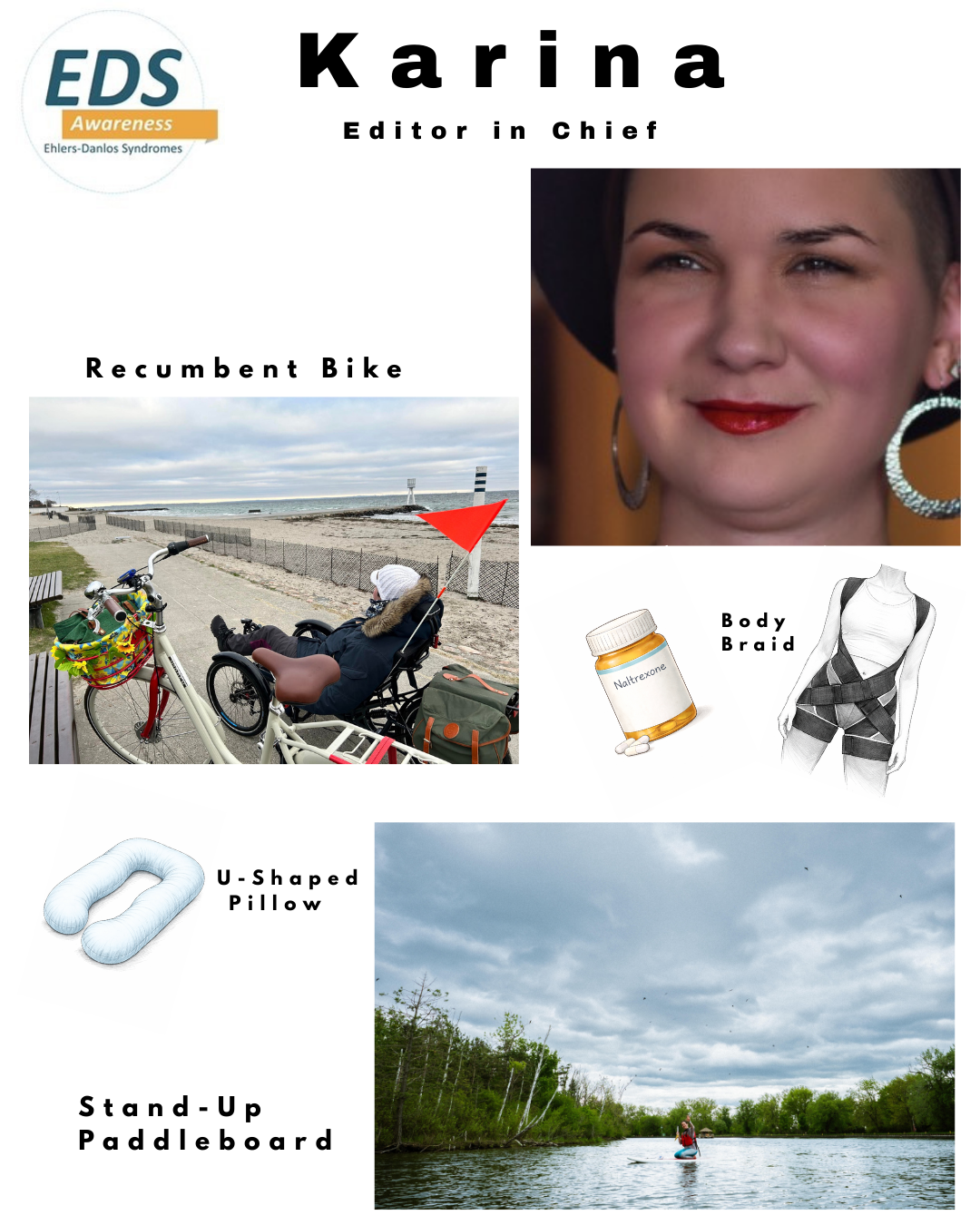
A recumbent bike offers a level of stability that makes independent movement possible even on days with significant joint instability or balance issues. Additionally, a three-wheel design minimizes fall risk, while the recumbent position reduces strain on joints and supports pacing. For people with dysautonomia, the seated, reclined posture can also make cardiovascular activity more tolerable.
Why Karina Likes it: “Using the HP Velotech Scorpion, which I lovingly call the Scorpion Queen, was a turning point for me. The three wheels mean I don’t have to constantly manage balance, which makes it safe even on my bad days. It allowed me to cover distances independently again and gave me back a sense of freedom I had lost. As a bonus, the recumbent position also helps with my dysautonomia.”
Favorite Pick #2: Stand-up Paddleboard
Stand-up paddleboarding is a low-impact form of exercise that can help build core strength. It is also highly adaptable, meaning it can be adjusted to meet your level of strength, balance, and comfort, such as using different paddles or stroke techniques. Paddleboarding can also be done seated by adding a removable kayak seat, providing an accessible option for those with dysautonomia. Lastly, paddling through a calm environment can foster a sense of relaxation. Being out in nature in general has even been shown to improve mental health and boost wellbeing.
Why Karina Likes it: “Stand-up paddling helps me work on core stability without overloading my joints. I can adapt how I use the board depending on my pain level, which makes it sustainable. Being on the water also has a noticeable positive effect on my mental health.”
Favorite Pick #3: Body Braid
For generalized joint instability and poor proprioception, common in EDS/HSD, external feedback can be helpful. The Body Braid provides whole-body feedback and gentle stabilization, helping reduce subluxations and improve body awareness.
Why Karina Likes it: “Because almost all of my joints are unstable, proprioceptive input makes a real difference for me. The Body Braid helps my body understand where it is in space and adds an extra layer of stability. It’s not always practical outdoors and it is really tricky to put on, but as a support tool, it fills an important gap.”
Favorite Pick #4: Low-Dose Naltrexone (LDN)
In recent years, low-dose naltrexone (LDN) has garnered attention as an off-label option for long-term chronic pain management in some patients with EDS/HSD.
Why Karina Likes it: “LDN brought my chronic pain down to a steady, manageable level. I still have acute pain spikes, but the constant overwhelm is gone. It also helped regulate my sleep and MCAS symptoms. For me, it has been the most effective medication I’ve tried, without noticeable side effects. It is not a cure, but it can meaningfully change day-to-day functioning.”
Favorite Pick #5: U-Shaped Pregnancy Pillow
A U-shaped pregnancy pillow provides continuous support to multiple joints at once, helping maintain more stable sleeping positions and reducing nocturnal subluxations, strain, and pain.
Why Karina Likes it: “Sleep is so incredibly important when living with chronic pain. With non-restorative sleep, I wake up with a much higher baseline of pain. Using a U-shaped pillow at night has helped me to keep my joints stable all night, which makes a real difference for my sleep quality and, therefore, also how I wake up in the morning.”
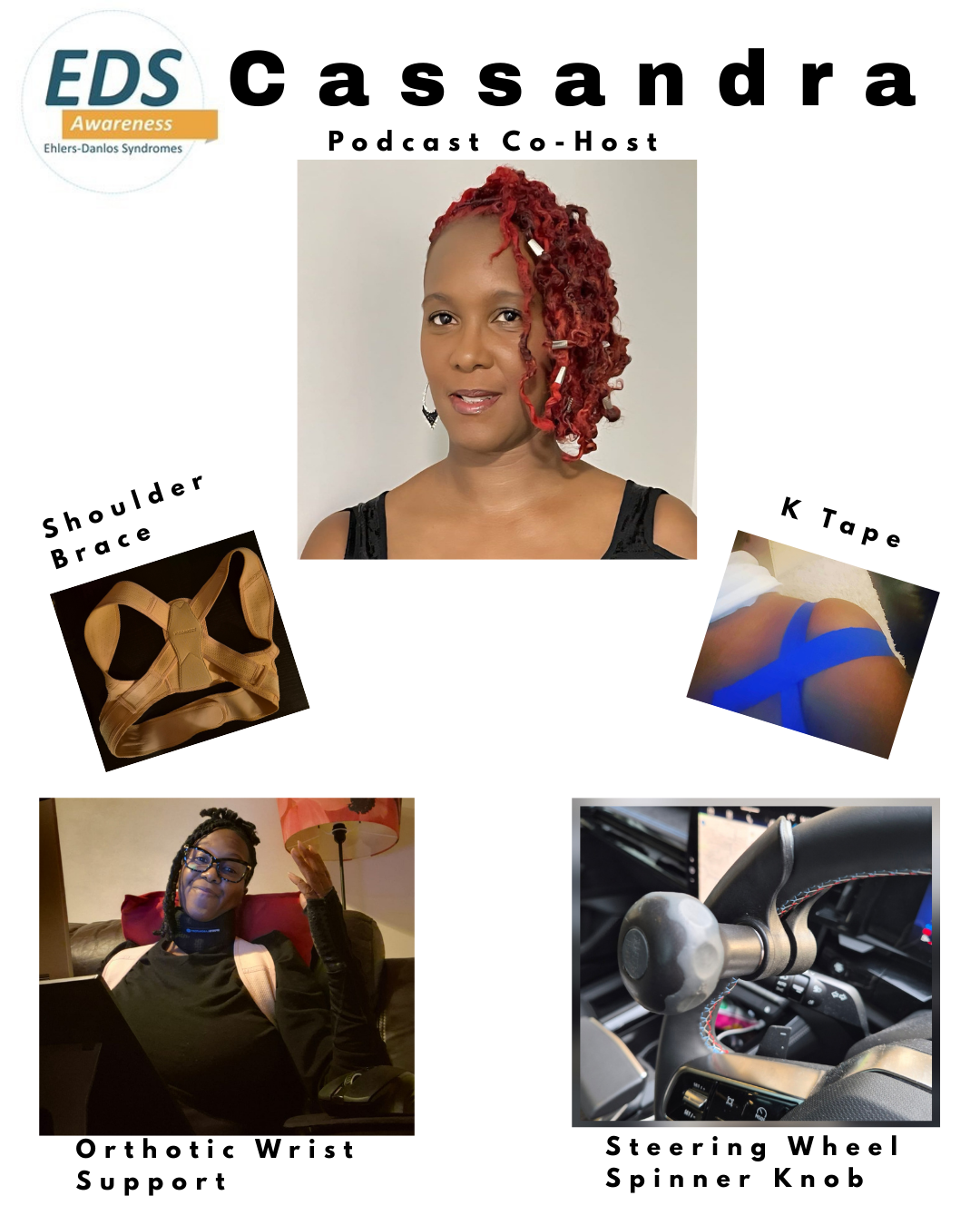
Favorite Pick #1: Kinesiology (K) Tape
When applied correctly, Kinesiology (K) tape can improve joint proprioception and stability. This, in turn, can reduce subluxations, a common occurrence for EDS/HSD individuals. Those with skin fragility or sensitivity, however, may need to be cautious when using this tape.
Why Cassandra Likes it: “K tape has been a great help when my joints have subluxated or dislocated. It helps keep them stable. You can find videos on YouTube that show how to apply it correctly. “
Favorite Pick #2: Steering Wheel Spinner Knob
Steering wheel spinner knobs are a quick and easy car adaptation that can provide low-effort, one-handed steering. This reduces strain on unstable hands, wrists, or shoulders, which is especially important for those with EDS.
Why Cassandra Likes it: “My steering wheel spinner knob is a permanent fixture in my car. It’s particularly helpful for parking after a wrist or shoulder subluxation or injury.”
Favorite Pick #3: Orthotic Wrist Support Braces
For EDS/HSD, wrist braces can be a great supportive aid for repetitive tasks, like typing, as they can stabilize joint alignment, reduce strain, and decrease pain.
Why Cassandra Likes it: “My orthotic wrist support helps to retrain my muscles and keep the joints stable. Very helpful when working on my laptop or doing anything else repetitive that impacts my wrists.”
Favorite Pick #4: Shoulder Brace
Shoulder braces can help people with EDS/HSD maintain postural alignment by providing proprioceptive feedback. Shoulder braces can also be particularly helpful during prolonged sitting or computer work, reducing neck and shoulder pain.
Why Cassandra Likes it: “My shoulder brace helps with posture and alignment and is a must in preventing a neck flare-up when working on my laptop for long periods, when editing the podcast or booking holidays for clients. With supports and braces, I am mindful, though, not to use them for prolonged periods so my muscles don’t become less active.”
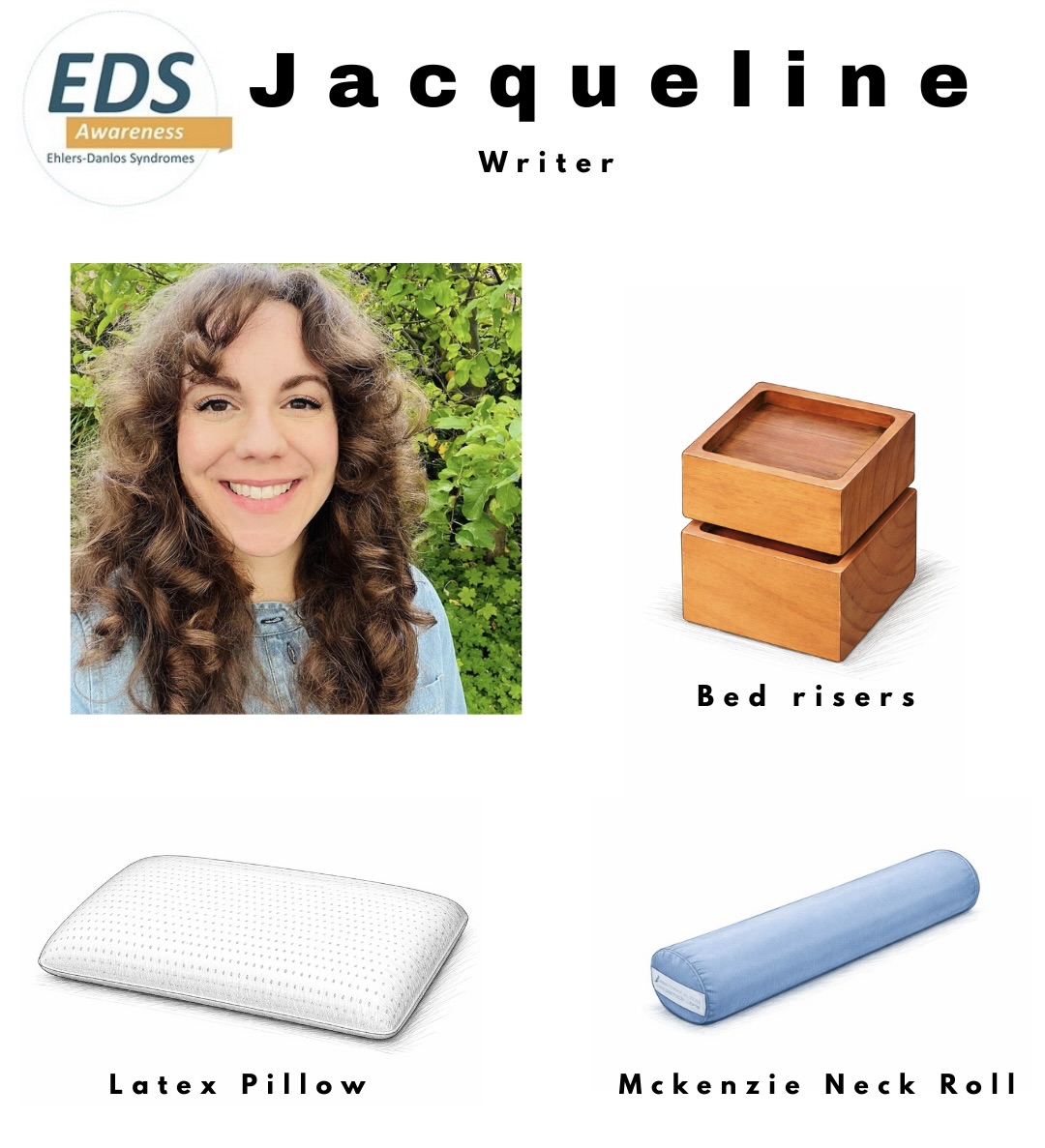
Favorite Pick #1: Bed Risers
Recently, some clinicians have observed an association between connective tissue disorders and cerebral venous outflow disorders, which involve impaired venous drainage from the brain (see our in-depth article for further information). For EDS patients with these conditions, elevating the head of the bed (for example, with bed risers such as these) may help support venous drainage and reduce nighttime head pressure.
Why Jacqueline Likes it: “I have internal jugular vein stenosis, a type of cerebral venous outflow disorder, that seems to be related to my hypermobility spectrum disorder (HSD). At my worst, I couldn’t lie flat without feeling intense head pressure, like I was hanging upside down. So, a doctor suggested bed risers and they helped. While I am much better these days thanks to physical therapy, I can still get some mild pressure increases once or twice a month. So, I continue to sleep slightly elevated every night. It’s a small habit that I feel helps support my long-term brain health.”
Favorite Pick #2: Natural Latex Pillow
Natural latex pillows (like this one) hold their shape throughout the night. This can translate into more consistent support and alignment for both your head and neck while sleeping. These pillows may also be a solid choice for those with chemical sensitivities, common inmast cell activation syndrome (MCAS), a condition frequently reported in EDS. This is because natural latex may lack the strong odors often found in more synthetic materials, like memory foam. However, those with latex allergies may want to opt for another natural pillow filling.
Why Jacqueline Likes it: “I have HSD, mild cervical instability, and internal jugular vein stenosis. So, making sure my neck and head are supported properly while sleeping is super important. With other pillows, the filling would always move around in the night, and I’d end up waking up every hour in crazy neck positions, which caused me pain, increased head pressure, and pulsatile tinnitus. The next day I’d have headaches, migraines, neck pain, lightheadedness, and brain fog. It was awful. I’ve been using this pillow for the past year, and it has been an absolute game changer. This pillow, in addition to physical therapy for my neck and posture, has made it so I can sleep through the night again and has drastically lessened my other symptoms throughout the day. So, for me, it’s priceless.”
Favorite Pick #3: McKenzie Neck Roll
The McKenzie Neck Roll helps support the cervical spine by maintaining its natural curve and proper alignment. This slim, cylindrical pillow is ideal for people who experience neck pain while lying down or upon waking.
Why Jacqueline Likes it: “My neck has reduced lordosis, meaning it has lost some of its natural curve. So, I use this pillow to give me better anatomical support and alignment while doing exercises or even relaxing on my back, and I feel like it makes a difference. I haven’t tried it while sleeping yet, but maybe I will in the future.”
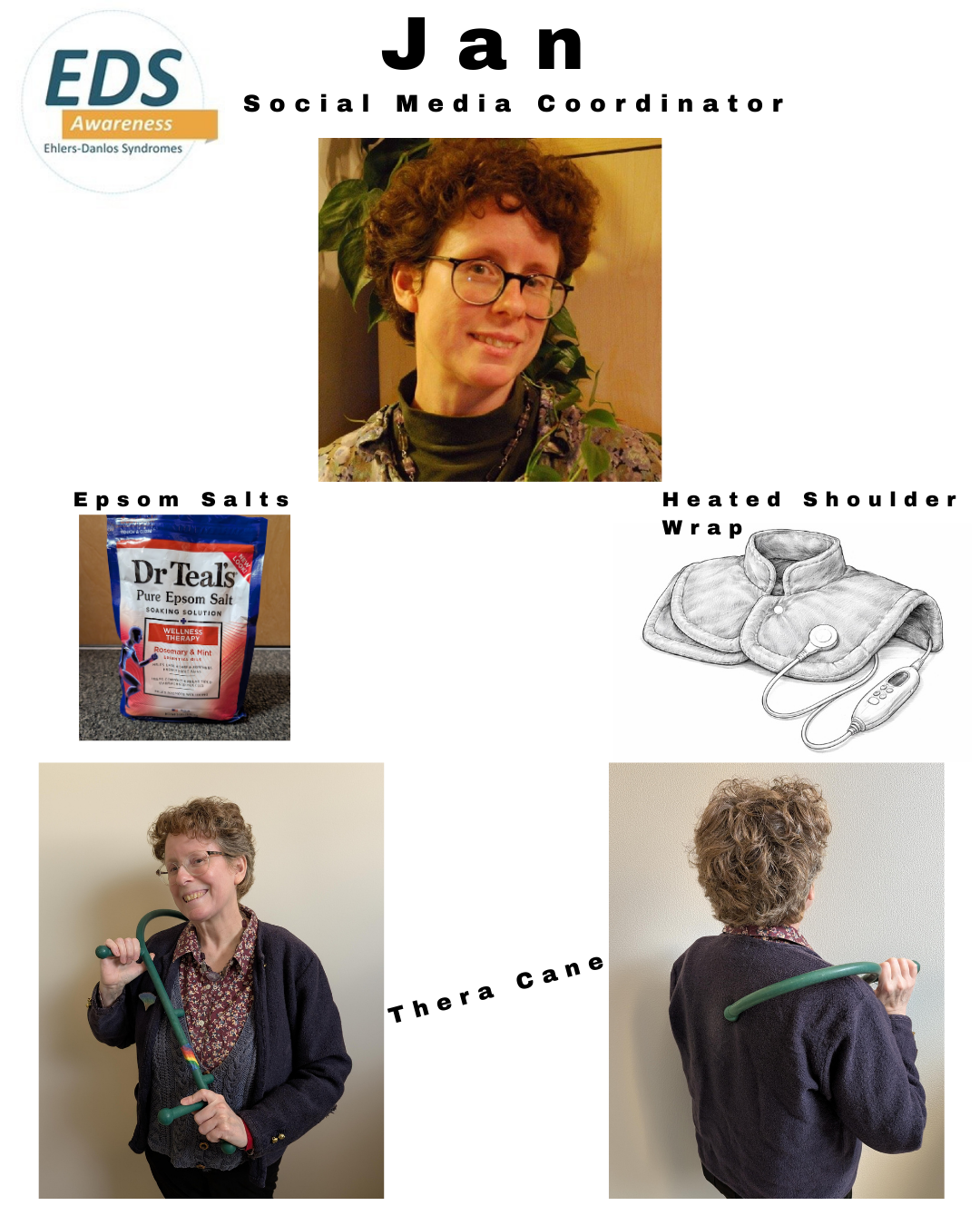 Favorite Pick #1: Thera Cane
In EDS/HSD, muscles are constantly working overtime to provide some level of stability and support. This often leads to chronic muscle tightness and guarding.
Thera Cane puts deep, targeted massage at your fingertips. This self-massage tool helps relieve tight muscles or stubborn trigger points, especially in hard-to-reach places. Its smart design also means you don’t need to twist or reach in ways that may be unsafe for your body.
Why Jan Likes it: “I fell in love with the Thera Cane when I learned about it in a pain management class almost 20 years ago, before I even knew I had EDS. I realized it would immediately help me to work out the knots I get in my upper back and spine from my thoracic vertebrae being out since 2007. I live alone, so it’s hard to get any massage or relief otherwise. And the Thera Cane lets me reach those spots on my back I could not otherwise get to without help. It’s also super helpful during my craft markets when I can’t lie down or get any relief. I might look a little funny, but it keeps me from melting down in pain!”
Favorite Pick #2: Epsom Salts
Epsom salts have been a popular choice for hundreds of years to ease sore, tired muscles, and can be a great addition to your toolkit for managing chronic pain with EDS/HSD. Simply soaking for 15-20 minutes in a bath filled with 1-2 cups of dissolved Epsom salts is said to be all you need to reap these benefits.
Why Jan Likes it: “Like many, I find Epsom salts to be quite relaxing. I’m so grateful to a co-worker introducing me to them almost 20 years ago, when he split a bulk supply with me. You can get them plain, or with various scents, like rosemary or mint”.
Favorite Pick #3: Sunbeam Heated Shoulder Wrap
Sunbeam, or other similar heated shoulder wraps, can provide soothing warmth to tight, sore muscles. As desk work can flare up the neck and shoulders, popping on a heated shoulder wrap during your workday for 20 minutes can be a useful addition to your EDS care routine.
Why Jan Likes it: “My third favorite item is my Sunbeam heated “shrug” or shoulder wrap. It’s essentially a heating pad that is contoured to wrap around your shoulders, neck, and back, and is secured with a magnet at the front. It comes with an adjustable control with four settings: low, warm, medium, and high, and shuts off automatically after about an hour. I get bad chills with my worst mast cell reactions, and this, plus a warm blanket, have helped keep my pain levels down as the chills stiffen my muscles.”
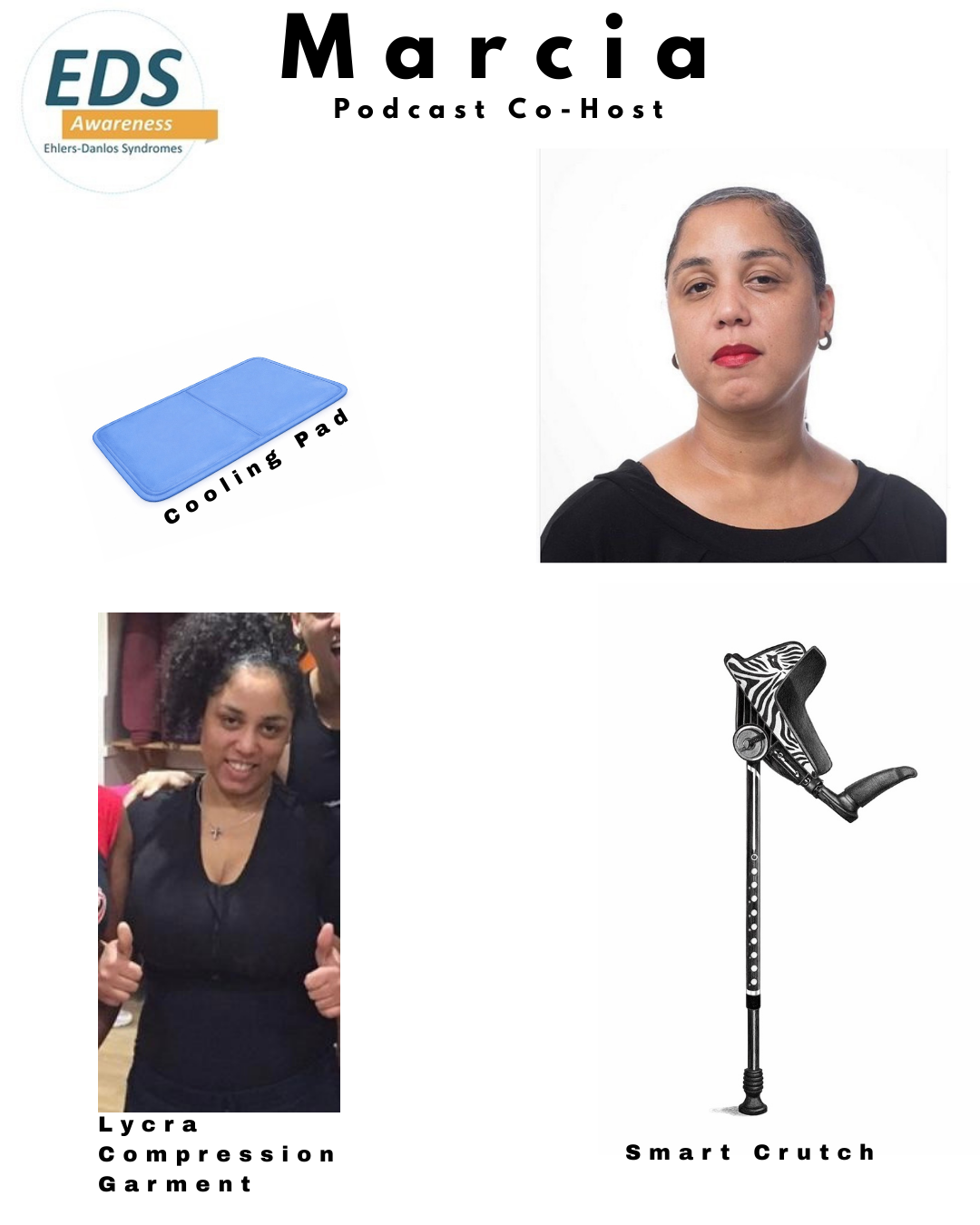 Favorite Pick #1: Lycra Compression Garment
Compression garments are a popular therapeutic tool often recommended for those with EDS/HSD. These garments may decrease pain and improve balance and stability, as well as reduce orthostatic intolerance caused by comorbid conditions, such as postural orthostatic tachycardia syndrome (POTS). These garments are available in both over-the-counter and prescription strengths and come in a variety of options based on your particular needs.
Why Marcia Likes it: “The Lycra garment was my most important aid that was laser-made for me from the University College London. It was my go-to. But now that I’ve lost weight, I’m waiting for a new one to be made. It was an absolute godsend, though, because it was a way I could wear something compressive on my body all the time. It really helped with my shoulders as they would sublux every time I leaned forward. So, even though it’s a bit big, I still wear it now while I’m waiting for a new one.”
Favorite Pick #2: SmartCRUTCH
Mobility aids, such as crutches, are sometimes needed by those with EDS/HSD. However, standard crutches can cause discomfort in already pain-prone joints, particularly in the hands or wrists. SmartCRUTCH, instead, is ergonomically designed to alleviate these crutch-related pressure points by spreading one’s body weight across a larger surface area. In addition, SmartCRUTCH is favored for its ability to be highly modifiable, both in comfort and appearance.
Why Marcia Likes it: “Cassandria introduced me to SmartCRUTCH. They are very comfortable and convenient, and they don’t look like your standard crutch either. You can do a lot of different upgrades to them too, like choosing a different color, which is great.”
Favorite Pick #3: A Cooling Pad
Subjective temperature fluctuations, and body temperature dysregulation more broadly, are reported within the EDS/HSD community, particularly among those with dysautonomia or MCAS. Using temperature-regulating strategies, such as cooling pads or garments, during periods of overheating can offer some relief.
Why Marcia Likes it: “When I feel a flare-up coming on, I get really hot in my body. Sitting on a cooling pad, similar to the kind they use for pets, helps me try and stop them before they get any worse.”
An Important Final Note
The supportive aids featured in this article are tools that members of our team have found helpful in their own lives. Their inclusion is based on personal experience and should not be considered a formal endorsement of any specific product nor be taken as medical advice.
The Ehlers-Danlos Society also advises that braces, crutches, or other external supports should be used alongside exercise that continues to engage and strengthen the muscles they assist. This helps prevent muscle weakness, which may contribute to a worsening of symptoms over time.
Before introducing any supportive aids into your routine, it is best to consult with your healthcare professional to ensure they are appropriate for you.
Jacqueline Teti, author and patient
with Hypermobility Spectrum Disorder
April, 2026