If you’ve ever coughed while eating, felt like food got stuck in your throat, or found yourself avoiding certain foods because they’re harder to swallow, you’re not alone. Many people with Ehlers-Danlos syndrome (EDS) and hypermobility spectrum disorders (HSD) describe these experiences, yet swallowing problems are often overshadowed by other symptoms like joint pain or fatigue.
Difficulty swallowing, known as dysphagia, is increasingly being recognized as a common symptom in people with hypermobility disorders, but more research is needed to fully understand it. Although dysphagia doesn’t always mean someone will choke, it can make eating stressful, uncomfortable, and sometimes unsafe if left untreated.
What is Dysphagia?
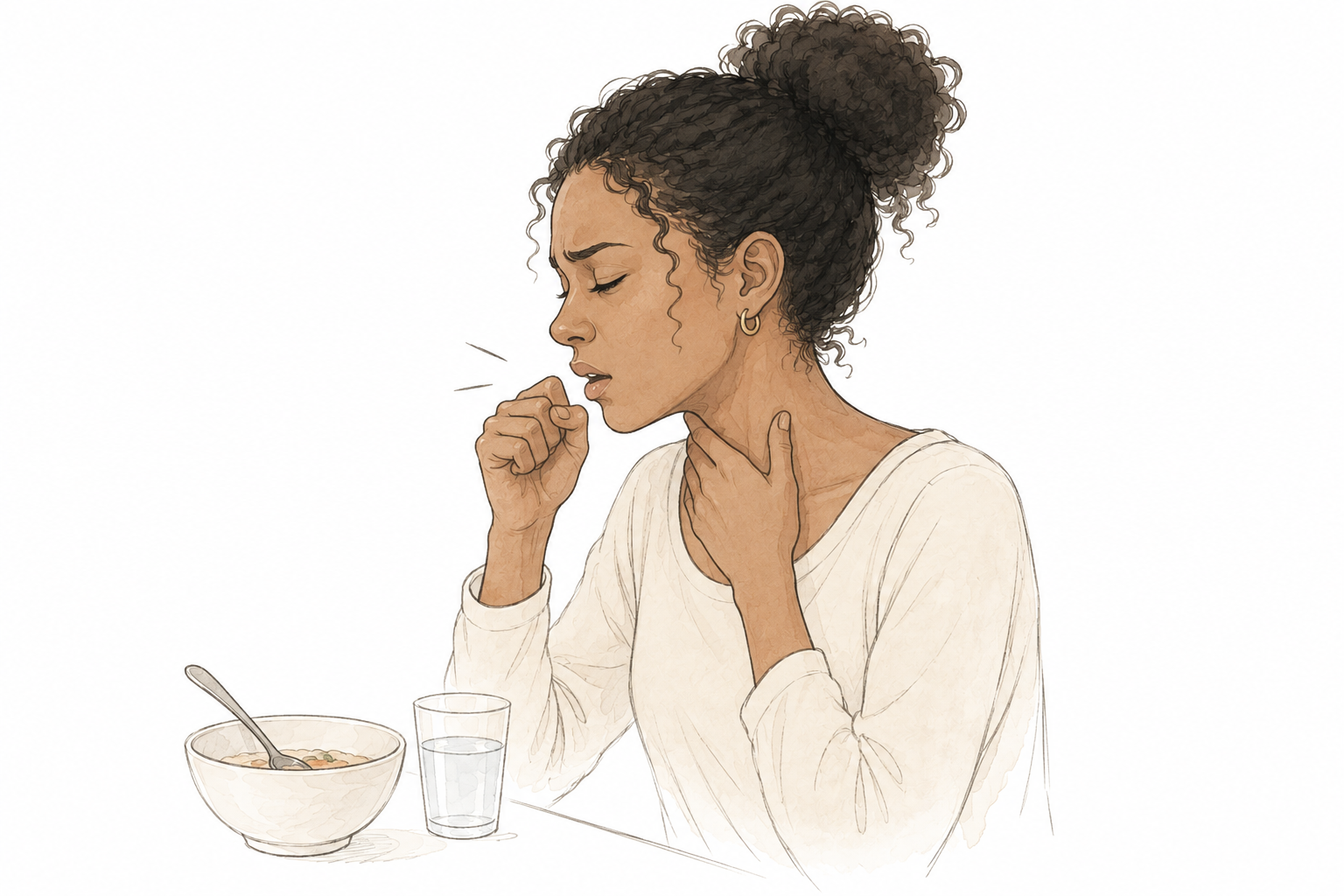
Dysphagia simply means difficulty swallowing. It can affect swallowing food, drinks, or even saliva. Some people feel like food gets stuck in their throat or chest, while others cough or choke during meals, need multiple swallows to clear food, or notice that eating takes much longer than it used to.
It’s important to remember that dysphagia doesn’t always mean someone is choking. Many people have trouble moving food through the mouth, throat, or esophagus without their airway actually becoming blocked. Still, swallowing difficulties shouldn’t be ignored, especially if they happen regularly.
How Common is it?
Although dysphagia is often mentioned as one of many gastrointestinal symptoms in EDS, recent research suggests it deserves more attention on its own.
One large study looked at 435 children and young adults with hypermobile EDS (hEDS) and joint hypermobility syndrome (an older diagnosis replaced by today’s hEDS/HSD classification). Researchers found that nearly one in three participants (32%) reported dysphagia, making it one of the most common gastrointestinal symptoms in the study after constipation (61%). Researchers at the Mayo Clinic also reported similar findings. In their study, about 34% of people with hEDS or HSD reported swallowing difficulties, with rates higher than those seen in the general population. A separate survey of more than 1,600 adults with EDS and HSD found that swallowing difficulties, reflux symptoms, and other throat-related complaints were all common. The survey found that 79.4% of participants reported swallowing difficulties, with people with hEDS generally describing more severe symptoms than those with HSD.
Taken together, the research points to swallowing problems being a frequent but underrecognized feature of EDS.
Why Does it Happen?
Researchers don’t think there’s one single explanation for dysphagia in hEDS and HSD. Instead, several different factors, including comorbidities, may contribute.
One possibility is that the muscles in the esophagus don’t move food as efficiently as they should. Doctors refer to this as an esophageal motility disorder. In one study, researchers found that about 40% of participants with dysphagia and joint hypermobility syndrome had minor problems with esophageal movement, while the remaining participants had what is known as functional dysphagia. This means they had real swallowing symptoms even though testing didn’t identify a clear problem with how the esophagus was moving.
Reflux may also play a role. The same study found that many participants had acid reflux or reflux hypersensitivity confirmed through testing, which can contribute to irritation of the esophagus and make swallowing more uncomfortable. A 2015 study also found that more than half of participants reported symptoms of acid reflux.
Another important finding came from a study by Sood and colleagues. Among participants with dysphagia, 33% were diagnosed with eosinophilic esophagitis (EoE), compared to 16% of participants without swallowing difficulties. Earlier research has also shown that people with inherited connective tissue disorders have about an eightfold higher risk of developing EoE than the general population. Identifying EoE can change treatment, as it has targeted therapies, including elimination diets and different medications, that may help relieve symptoms.
Could POTS Make Swallowing Problems Worse?
It might.
Many people with hEDS also live with postural orthostatic tachycardia syndrome (POTS), and researchers are beginning to look at whether the two conditions may be connected.
In a 2017 study, people with joint hypermobility syndrome who also had POTS reported more severe swallowing difficulties and reflux symptoms than participants without POTS. The autonomic nervous system is responsible for several involuntary bodily functions, including swallowing. More recently, a small qualitative study explored the lived experiences of people who had both POTS and swallowing difficulties. Eight of these eleven participants also had EDS, and described their swallowing difficulties as affecting their daily lives, relationships, emotional well-being, and experiences with healthcare. The authors concluded that more research is needed to better understand why dysphagia occurs in POTS and to develop targeted treatments.
When Should You Talk to Your Doctor?
Swallowing difficulties aren’t something you have to simply accept as part of living with EDS.
If you’re regularly coughing or choking while eating, feel like food gets stuck, notice your symptoms are getting worse, or experience unexplained weight loss, it’s worth talking to your healthcare provider.
Depending on your symptoms, they may refer you to a gastroenterologist, an ear, nose and throat (ENT) specialist, or a speech-language pathologist who specializes in swallowing disorders. Additional testing may include an upper endoscopy, swallowing evaluation, reflux testing, or esophageal motility studies to better understand what’s causing your symptoms.
What Can Help?
Treatment depends on what’s causing the swallowing difficulties.
For some people, managing reflux or treating eosinophilic esophagitis may improve symptoms. Others may benefit from working with a speech-language pathologist who specializes in swallowing therapy.
While waiting to be evaluated, SEDSConnective recommends a few simple strategies that may make eating easier:
- Take smaller bites and sips.
- Sit upright while eating and drinking.
- Add sauces or broths to dry foods.
- Try softer foods if they’re easier to swallow.
- Eat slowly and avoid rushing meals.
- Pay attention to foods or textures that seem to make symptoms worse.
- Seek medical advice if swallowing difficulties continue.
These tips may help make meals more comfortable, but they aren’t a replacement for a medical evaluation if symptoms persist.
Looking Ahead
Researchers are still working to understand exactly why dysphagia is so common in people with hEDS and HSD. What is becoming clearer, however, is that swallowing difficulties are more than an occasional symptom. They affect a significant number of people within the EDS community and can have a real impact on daily life. But swallowing difficulties don’t have to be accepted as simply part of living with hypermobility. Evaluation can help identify underlying causes and connect people with appropriate treatment and support.
Hailee Munno, Author
Writing Intern, Chronic Pain Partners
August, 2026
Edited by Jacqueline Teti, Editor-in-Chief