Living with EDS often comes with navigating an ongoing cycle of injuries, fatigue, symptom flares, medical appointments, unexpected setbacks, and uncertainty about what your body will do next. For many people, EDS-related stressors are cumulative, where each new experience adds to an already heavy emotional burden.
Over time, this constant state of stress and adaptation can affect both your physical and mental health. The toll of living with a chronic condition can lead to chronic illness burnout, or a state of emotional, mental, and physical exhaustion. For some people, these ongoing experiences can contribute not only to burnout, but also to medical trauma. Conversations around trauma frequently focus on anxiety, nightmares, or avoiding reminders of frightening experiences. Yet trauma can also cause people to disconnect from their emotions because the mind and body have been working for so long to cope with ongoing threat and overwhelm. Anhedonia, the loss of interest or pleasure in things a person once enjoyed, is a more widely recognized symptom. However, trauma can also involve reduced emotional responses across the full spectrum, including both positive and negative emotions. This experience, typically called emotional numbness, is an often-overlooked response to prolonged stress or trauma.
Emotional numbness is not a diagnosis on its own, and it may occur alongside dissociation (feeling disconnected from yourself or your surroundings) or depression. However, it is important to know that while these experiences can be related, they are not the same and do not always occur together. Emotional numbness also does not necessarily mean that someone is depressed, nor is it the same as apathy, which involves a lack of motivation or desire to do things.
.
What Is Medical Trauma?
Medical trauma refers to frightening, overwhelming, or distressing medical experiences. Medical trauma may arise from a single acute medical event or from cumulative experiences associated with the diagnosis, treatment, and long-term management of a chronic condition.
For many people living with EDS, medical trauma can result from the cumulative burden of managing symptoms, diagnostic uncertainty, and changes in functioning. Living with a chronic condition can also increase the likelihood of experiencing acute stressors, like emergency care or hospitalization. Many also describe years of feeling dismissed by healthcare providers. Experiences such as medical gaslighting, bias, or invalidation can also be traumatic, particularly when they occur repeatedly during times of vulnerability.
Researchers have increasingly recognized that trauma related to illness can differ from trauma following accidents or violence. One concept that helps explain this is enduring somatic threat. Unlike many traumatic events where the danger eventually ends, people with chronic medical conditions, like EDS, may continue to experience symptoms that cue the brain and body that something feels wrong. The source of threat can feel as though it lives inside the body itself.
What Emotional Numbness Can Feel Like
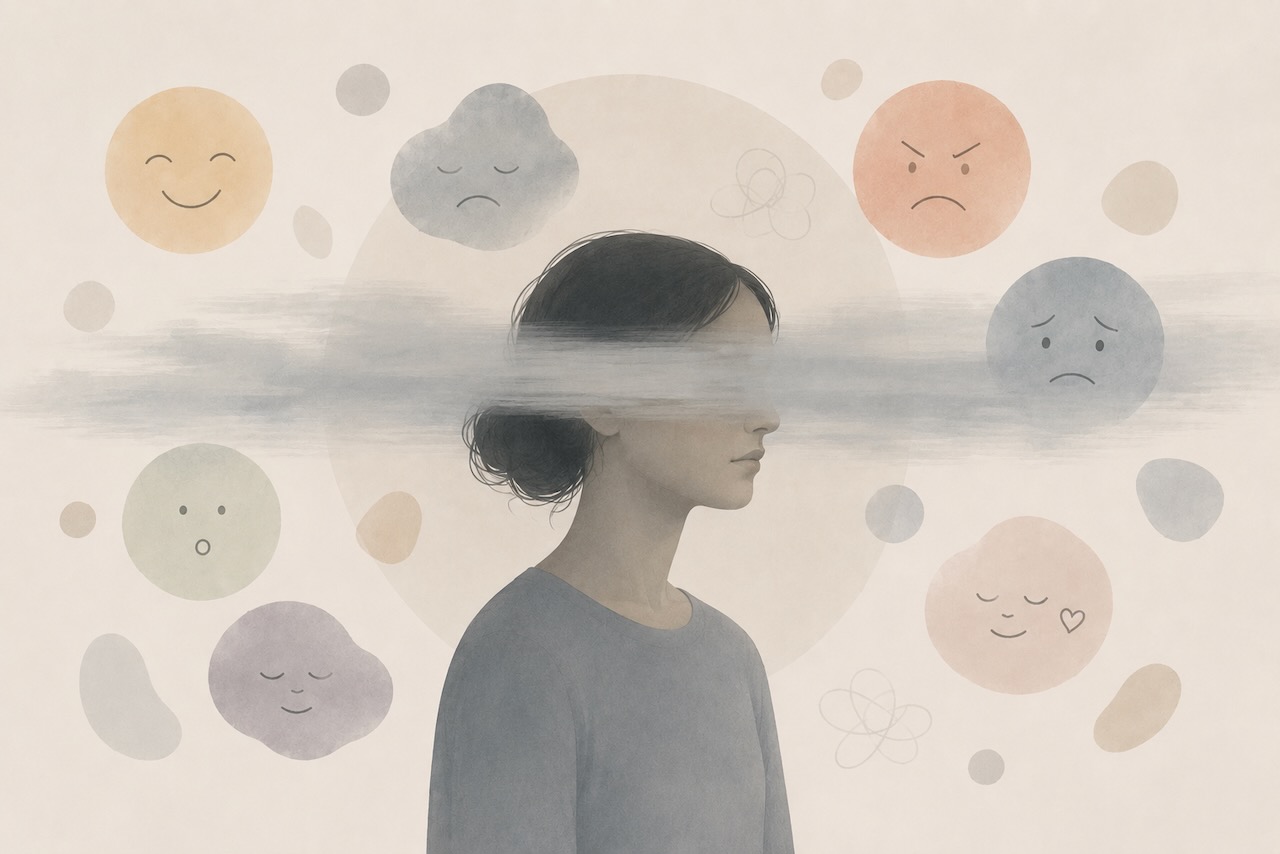
Emotional numbness is the nervous system’s way of protecting itself after prolonged overwhelm. It can look different from person to person, but common experiences can include:
- Feeling less emotional warmth or affection toward family or friends, despite still caring about them
- Having difficulty accessing emotions, even when you want to
- Feeling emotionally “flat” or unable to react as you normally would
- Struggling to experience positive emotions such as joy, excitement, or affection
- Having difficulty experiencing negative emotions such as sadness, anger, fear, or grief
- Having a reduced response to people or experiences that would normally evoke stronger emotions
For example, you may intellectually know that you love your children, partner, or other people close to you, but you may have difficulty actually feeling that love or connection. Similarly, at a funeral you may not be able to feel sadness or grief despite being close to the person who passed. The absence of these emotions can carry its own emotional weight. Feeling nothing during moments when you know you would normally feel something can be confusing, upsetting, or even frightening. Emotional numbness can also fluctuate over time, where emotions may feel more accessible on some days and more difficult to feel on others.
Why Emotional Numbness Happens
One helpful way to understand emotional numbness is through the idea of the window of tolerance. This is the range where we’re able to manage everyday challenges while maintaining a sense of balance and connection to ourselves, others, and the world around us.
When we are within our window of tolerance, we can think clearly, solve problems, and engage with others. We still experience stress, but our nervous system is able to recover.
When stress becomes overwhelming, we may move into hyperarousal, sometimes called the “fight or flight” response. This can involve anxiety, racing thoughts, irritability, panic, or constantly feeling on edge.
If the nervous system continues to experience intense or prolonged stress, it may shift into hypoarousal, or a “freeze or flop” shutdown state. A person may feel exhausted, withdrawn, or as though they are simply surviving each day. Emotional numbness can be one feature of this broader response.
For people with EDS, the ongoing demands of managing symptoms, coping with uncertainty, and facing recurring health-related stress can repeatedly move the nervous system outside its window of tolerance. Over time, emotional shutdown can become a predictable adaptation to chronic stress. It is important to remember that emotional numbness isn’t a personal failure. It is an automatic nervous system response.
Why This Matters for People Living with EDS
Emotional numbness can affect how a person connects with the people and experiences that matter to them. Some people may begin withdrawing from family or friends, not because they no longer care, but because they have difficulty feeling the emotions and connection they would normally experience.
Emotional numbness is also often part of a larger collection of symptoms associated with medical trauma. Emerging research suggests that medically induced post-traumatic stress disorder (PTSD) may be relatively common among individuals with hypermobile EDS, although this area of research is still developing. Importantly, medical trauma does not always look like PTSD following a single traumatic event. The ongoing nature of chronic illness means that reminders of trauma may occur every day through symptoms, treatments, or interactions with the healthcare system. As a result, medical trauma can make it more difficult to actively manage a chronic illness. Pain flares, medical appointments, or bodily sensations can become reminders of previous distressing experiences. For some people, this contributes to avoiding healthcare or delaying treatment because engaging with healthcare has become emotionally overwhelming.
There Is Hope
Although emotional numbness can feel frightening, it is not permanent for many people.
While research specifically examining treatments for medical PTSD (mPTSD) related to EDS remains limited, effective treatments for PTSD can help people recover from many different kinds of traumatic experiences.
Therapies such as:
- Cognitive Processing Therapy (CPT)
- Eye Movement Desensitization and Reprocessing (EMDR)
- Prolonged Exposure (PE)
- Written Exposure Therapy (WET)
Each has evidence supporting their use for PTSD and may be appropriate for some individuals experiencing traumatic stress related to medical events.
Other approaches can also help people cope with distressing thoughts and emotions while managing the realities of living with chronic illness and help support emotional regulation and improve quality of life.
- Acceptance and Commitment Therapy (ACT)
- Cognitive Behavioral Therapy (CBT)
- Dialectical Behavior Therapy (DBT)
- Mindfulness-based interventions
- Problem Solving Therapy (PST)
Equally important is addressing physical symptoms whenever possible. Physical therapy, occupational therapy, sleep interventions, nutritional support, and effective pain management may not only improve physical functioning but also improve mood, coping, and adjustment. Supporting both the body and the mind recognizes that these experiences are deeply connected rather than separate.
Other Factors That Can Contribute to Emotional Numbness
While emotional numbness can occur in response to stress, trauma, or other mental health issues, there are other possible causes as well. Certain medications, substance use, and some medical or neurological conditions can also contribute to emotional blunting or numbness. If emotional numbness is new or unexplained, it is important to talk with your healthcare provider about other possible causes.
Key Takeaways
- Medical trauma can develop from both a single frightening medical event and the cumulative stress of living with a chronic condition.
- Emotional numbness is a common but often overlooked response to prolonged medical stress.
- Emotional numbness is different from anhedonia, which specifically involves a loss of interest or pleasure in things a person would normally enjoy.
- Emotional numbness may also occur alongside dissociation or depression, but these experiences are not the same.
- It is also different from apathy, which primarily involves reduced motivation.
- For people living with EDS, chronic symptoms, diagnostic uncertainty, and difficult healthcare experiences may increase vulnerability to medical trauma.
- Emotional numbness isn’t a personal failure. It is an automatic nervous system response.
- Emotional numbness can be addressed with appropriate time, support, and treatment.
- Although research on mPTSD in EDS is still growing, effective trauma-focused treatments and supportive therapies are available.
- Healing often involves understanding the mind-body connection and attending to both our physical, emotional, and social health needs.
- Emotional numbness is not always related to trauma or mental health. Certain medications, substance use, and some medical or neurological conditions can also contribute to emotional numbness or blunting.
Support and Resources
- More Information About Emotional Numbness
- Elevate Rare
- International Society for Traumatic Stress Studies
- Medical Trauma Support
- Books
- Reclaiming Your Life from Medical Trauma — James C. Jackson
- Medical Stress and Trauma: A Mindfulness-Based Approach to Reclaiming Safety and Empowerment — Christen Mullane
Sacha McBain, Author
Clinical Psychologist & Co-Author
Medical Trauma: Assessment Tools, Coping Skills,
and Recovery Strategies for Survivors and Therapists
Edited by Jacqueline Teti, Editor-in-Chief
August, 2026
Disclaimer: The resources listed above were provided by the author. Their inclusion does not constitute an endorsement by EDS Awareness / Chronic Pain Partners.