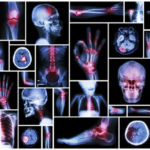
September is recognized internationally as Pain Awareness Month. (Look for hashtags #PainAwarenessMonth and #ThisIsPain on social media). Most types of Ehlers-Danlos Syndrome and Hypermobility Spectrum Disorder unfortunately cause varying amounts of pain for most patients, so Chronic Pain Partners/EDS Awareness is joining the chorus to raise awareness. It’s in our name, after all!
The Ehlers-Danlos Syndromes (EDS) and Hypermobility Spectrum Disorders (HSD) do not discriminate, and run through all ethnicities and populations around the world to varying degrees. And one of the more universal symptoms and experiences for all of them is chronic pain, of all kinds. Chronic pain in EDS varies as to degree and duration as well.
First, some terminology clarification:
Acute pain is defined as sudden onset pain, short in duration, lasting less than three months. An example might be a burn, or rolled ankle that heals with time, so the pain lessens and ultimately goes away.
Chronic pain is defined as pain of any kind, whether of a sudden onset or not, that lingers for more than three months. Chronic joint pain is very common in all forms of EDS and HSD for example, due to so many subluxations (partial dislocations or reduced ones) in our bodies. Some patients have never known life without some level or kind of pain in their bodies.
Chronic Pain and EDS observed through the years
Chronic pain has been observed in the Ehlers-Danlos Syndromes for years. A small 1997 study by Sacheti, Szemere et al noted that:
Affected individuals reported chronic pain of early onset involving most frequently the shoulders, hands and knees. Pains was generally refractory to a variety of pharmacologic and physical interventions. Chronic pain is a common manifestation of EDS.
A 2010 study indicated that pain in EDS is common, severe, and associated with functional impairment. From the discussion:
This study in a large group of EDS patients shows that 1) chronic pain is highly prevalent in EDS and is associated with regular use of analgesics; 2) pain is more prevalent and more severe in patients with the hypermobility type than in those with the classic type and vascular type; 3) pain severity is related to hypermobility, dislocations, and previous operations but not to other disease-related factors; 4) pain is related to sleep disturbances; and 5) pain is related to functional impairment in daily life, independent of the level of fatigue.
The causes of our chronic pain will also vary, from the very obvious biomechanical – stretching, tearing and bruising of tendons, ligaments, muscles and more from hypermobility and weak connective tissues lending to subluxations and dislocations as described above and in this 2017 paper by Dr. Bluestein. To the slightly less obvious but equally painful biochemical – from mast cell activation, which causes extra inflammatory pain throughout the body. As well as impinged bits, tears, strains and neuropathy.
EDS and HSD patients often live in varying states of injury most of their lives. Some hypermobile EDS (hEDS) patients may start out holding together fairly well, but then experience either a traumatic event like a car accident, serious illness or other major stress or even hormonal change triggering a sort of cascade of onset that changes things up. Where you may have managed fairly well before, and only been diagnosed with fibromyalgia or “malingering” if anything at all (especially if you code as a woman in the west), you may suddenly start subluxing and or dislocating fully much more readily or widely than before for no apparent reason. And your daily pain levels may rise as well as you manage this new, much less stable condition. Others will have been born extremely hypermobile out of the gate, and or injure more easily from childhood. And others, never fall apart much if at all, lending to medical confusion – even within the same family.
Pain from comorbidities joins the chat
Additional co-occurring conditions (aka “comorbidities”) can also cause chronic pain in EDS and HSD patients. Here are some of the more common comorbidities reported in patient support groups, studies and clinics over the years:
- Fibromyalgia (often diagnosed before and or instead of EDS or HSD in some)
- Mast Cell Diseases (MCDs) like MCAS and Mastocytosis or HaTS
- CRPS (formerly called RSD) – an unexplained inflammatory condition post-injury
- Irritable Bowel Syndrome (IBS)
- Chostocondritis (inflammatory pain in the sternum)
- Slipping rib syndrome
- Vulvodynia
- Hernias (hiatal and other)
- TMJ and cranio-facial pain
- Fallen or falling arches (pes planus)
- Hyodrocephalus, IIH, and Chiari malformation
- Kidney stones (to which some are more prone for unknown reasons)
- Migraines and all other forms of headaches (musculoskeletal, tension, IIH)
- Small fiber neuropathy (can lead to both increased and decreased pain sensations)
- Co-occurring arthritis and other autoimmune diseases like ankylosing spondylitis
The above list is by no means complete. It is just a sample of some of the more common co-occurring conditions reported. There are many others. Check our Patient Guides for some resources.
Pain from all of these different sources can also widely vary, from dull throbbing aches in tired muscles, to sharp stabbing pain in hernias, torn tendons or ligaments, to burning pain from neuropathy or from MCAS reactions. Sometimes it throbs, sometimes it’s just always there. Other times it ebbs and flows, comes and goes depending on body usage or the barometric pressure.
Some of us even get injured in our sleep. There’s a community joke that our baseline is “car crash”, and we start there every day. But it’s not really a joke, unfortunately. Some patients literally have to put their shoulders and hips and knees back in place in the morning after sleeping on their sides. Ribs can go out. The neck bones can go out, leading to painful stabbing headaches in some. Skin, muscles and more (especially blood vessels in vascular EDS) can tear and rupture as well in some cases. EDS is no joke, although my favorite retort to “What happened to you?” as you come in to work wearing a neck brace or cervical collar is: “You should see the other guy.” (Insert wry smile.)
Some unusual complications
It doesn’t help that many of us also out-process many anesthetics more readily and quickly than average, such that we need more topping up than most patients. Sadly, if your doctors don’t believe you, this can cause traumatic experiences, and not just at the dentist. We are the patients who wake up mid-surgery sometimes, feeling everything. Others wake up a bit early, or aren’t sedated fully before they start operating. We really can’t make this up.
To further complicate matters, some of us are autistic and may not express pain appropriately in our faces (we don’t show a “pinched” pain face, for example, or fail to grimace or gasp etc. as you palpate our parts). This does not mean we are not experiencing pain. And conversely, some of us may also not experience enough pain, despite having gross injuries – even broken bones – without either fully knowing it, or feeling it. So again, our faces may not match our conditions, making it hard to be believed in the Emergency Room or A&E. We may also struggle to find the words to best describe what we are feeling.
We dearly wish we did not experience so much pain. It’s encouraging to see new drugs being developed to try to help. But, until even more are developed, many of us will go undertreated for our pain and thus may be more disabled or limited in our activity level than we’d like. While we don’t want to add to the opioid crisis, we also know many EDS patients who are suffering from inadequate pain management as a result of the backlash. This is just beginning to be recognized as reported by Pain News Network this past year.
Hopefully further advances in medicine possibly assisted by AI will help to speed up the development of new molecules for pain management. Meanwhile, we strongly encourage working with your doctors to find the right combination of therapies (physical, emotional and cognitive) as well as medications (chemistry), tools (like TENS units) and modalities (acupuncture, massage, meditation) that can best work for your body. May you have a low-pain day – or as many as possible.
Jan Groh, author OhTWIST blog and co-author EDS Toolkit for Doctors September 16, 2025
Resources:
- https://www.iasp-pain.org/advocacy/pain-awareness-month/
- https://uspainfoundation.org/painawarenessmonth/
- Chronic Pain Is a Manifestation of the Ehlers-Danlos Syndrome – Scheti, Szemere, Bernstein et al 1997
- https://www.tamingthebeast.ca/www.tamingthebeast.ca/index.html (a late EDSer’s blog on EDS, MCAS, POTS and CRPS that tied them all together)
- https://pmc.ncbi.nlm.nih.gov/articles/PMC1079398/ (2005) On anesthesia resistance with EDS
- https://pmc.ncbi.nlm.nih.gov/articles/PMC6834718/ (2019) On anesthesia resistance with EDS
- https://pubmed.ncbi.nlm.nih.gov/23444824/ ) Fibromyalgie – an unrecognized EDS type? 2015 Hermain-Le, Pierard, Angenot
- Chronic Pain defined by Cleveland Clinic
- The Silent Opioid Crisis: Seriously Ill Patients Face Frequent Delays in Pain Treatment April 2025 Pain News Network
- Pain in Ehlers-Danlos Syndrome Is Common, Severe, and Associated with Functional Impairment 2010 Voermans, Knoop, Bleijenberg, van Engelen
- Mast cells: virtual gatekeepers of pain 2016 Chatterjea, Martinov
- A Practical Guide for Treatment of Pain in Patients with Systemic Mast cell Activation Disease 2017 Wirz, Molderings
- Understanding MCAS and Pain via Mast Cell Action
- The Association Between Hypermobility Ehlers–Danlos Syndrome and Other Rheumatologic Diseases 2021 Makol, Chakravorty, et al
- Ehlers-Danlos Syndrome and Comorbid Conditions – Harris, D EDS Clinic 2024
- The most common comorbidities in patients with Ehlers-Danlos syndrome: a 15-year nationwide population-based cohort study 2022 Legonger, Fonnes et al
- PT Elan Schneider on Neuroplasticity and New Approaches to Treat Chronic Pain via CPP
- Pain Management in Patients With Hypermobility Disorders: Frequently Missed Causes of Chronic Pain – Dr. Linda Bluestein via CPP 2020