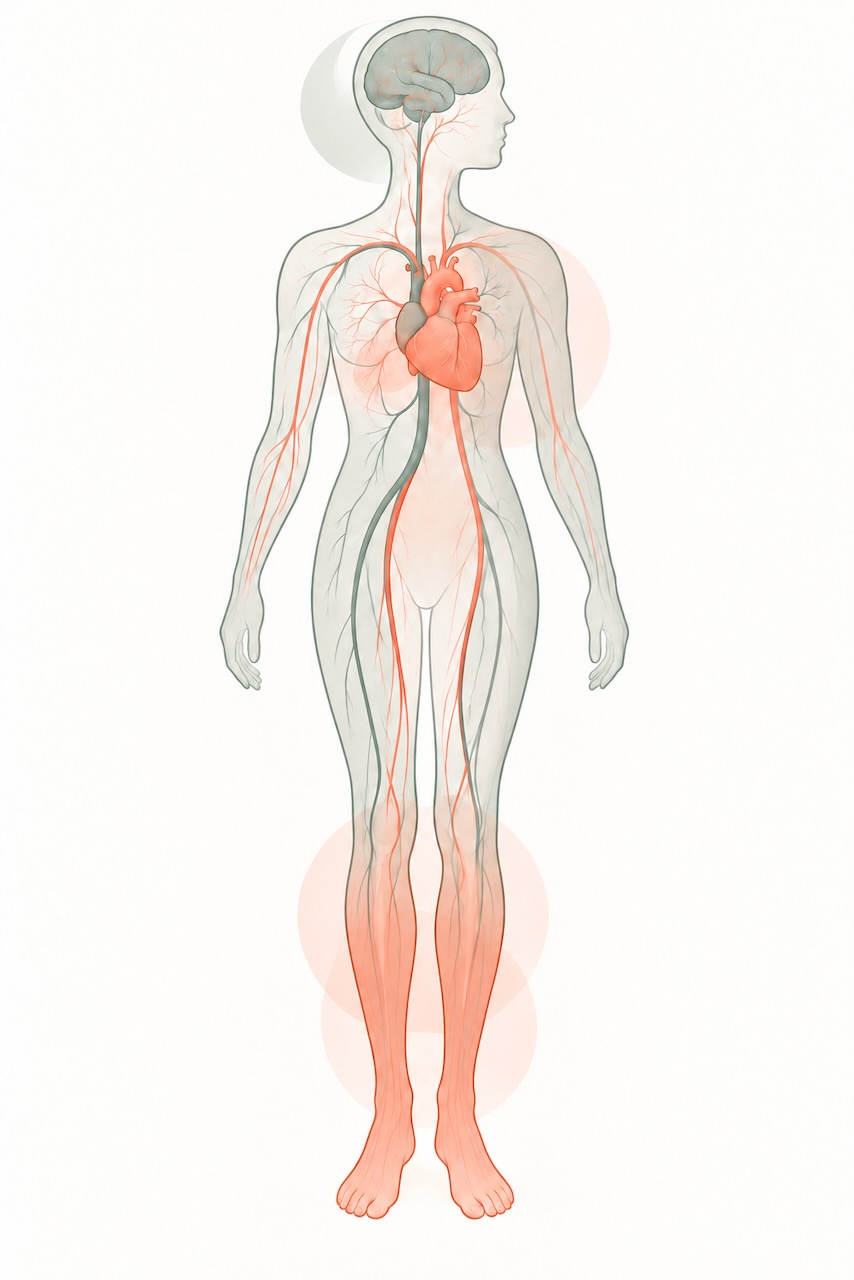
You feel lightheaded when you stand, have brain fog, palpitations, exercise intolerance, fatigue, and headaches. If your general practitioner is knowledgeable (and that’s a big “if”) they give you a referral to a specialist who runs appropriate testing to see if you have postural orthostatic tachycardia syndrome (POTS). Your tilt table test may suggest too little blood returning to your heart (preload insufficiency) or show low carbon dioxide levels at the end of each exhaled breath (reduced end-tidal CO₂), both findings seen in POTS. If you are extraordinarily lucky, you may have received a transcranial Doppler during your tilt table test (a rare unicorn, usually limited to research and specialized autonomic clinics), revealing another common finding in POTS: a substantial drop in cerebral blood-flow velocity when upright.
The only catch? You don’t meet the main heart-rate criterion. While you are one of the many patients who have similar symptoms and physiological findings associated with POTS, your heart rate doesn’t show a sustained increase of at least 30 beats per minute (bpm) within 10 minutes of standing if you are an adult, or at least 40 bpm if you are an adolescent aged 12–19. For example, maybe your heart rate rose by only 28 bpm. And now, despite having similar symptoms and daily burden, or even disability, as someone with POTS, you may be left without a diagnosis. And, without a diagnosis, treatment and healthcare coverage may be a struggle.
But should recognition and treatment for dysautonomia depend on meeting the POTS heart-rate cutoff?
It shouldn’t, according to a new 2026 international, multidisciplinary consensus paper released online as a pre-proof in The American Journal of Medicine.
Why Experts Have Decided to Speak Up
According to this paper, experts around the world are noticing that a subset of patients evaluated for POTS have symptoms, functional impairment and orthostatic intolerance highly consistent with POTS but without meeting the required heart-rate increase. Despite the day-to-day impact of their symptoms, these patients remain undiagnosed, untreated, and excluded in research. To help change that, this multidisciplinary group came together to develop expert guidance on recognizing, diagnosing, and treating both POTS and what the paper calls ‘non-POTS dysautonomia,’ while identifying priorities for advocacy, physician education, and future research.
Is Non-POTS Dysautonomia a New Formal Diagnosis?
No. ‘Non-POTS dysautonomia’ is a working term used in this paper to facilitate discussion about how best to name and classify these patients. The authors also explicitly state that it is not a formal diagnosis and that they do not endorse using the term beyond this study. In fact, many members of the expert panel proposed alternative names as well, including POTS spectrum disorder, orthostatic cerebral hypoperfusion syndrome (OCHOS), hypocapnic cerebral hypoperfusion (HYCH), and postural symptoms without tachycardia (PoSWoT). For now, though, what to call this group and how best to classify them remain open for future discussion.
What the Experts Agreed On
Forty experts from seven countries, such as neurologists, cardiologists, pediatricians, internal medicine specialists, and patient advocacy representatives, voted on 31 consensus statements covering everything from diagnosis and treatment to advocacy and the future direction of dysautonomia research.
For example, 95% agreed that non-POTS dysautonomia should be diagnosed in patients who have clinical features consistent with POTS but don’t meet the heart-rate criteria. 100% agreed that patients with non-POTS dysautonomia can experience very similar functional impairment or reduced quality of life as those with POTS. And 100% agreed that non-POTS dysautonomia should be a valid diagnosis when deciding which accommodations may be needed at work or school. Overall, all 31 statements received over 90% agreement, with 24 receiving unanimous (100%) agreement.
Why Does This Matter?
If you are one of the many patients with symptoms and functional limitations that are highly aligned with the diagnosis of POTS, but who do not meet the heart-rate criterion, you may have been dismissed and left in limbo. This consensus finally draws attention to this underserved subset and acknowledges that non-POTS dysautonomia patients deserve the same recognition, access to care, and accommodations as those with other forms of dysautonomia.
Final Thoughts
There is still plenty to work out, including how best to define this group, and POTS criteria remain unchanged. But by recognizing that these non-POTS dysautonomia patients can have significant autonomic dysfunction, the authors hope to encourage further research into biomarkers and treatments, help establish clearer diagnostic criteria, and improve care and support.
If you’ve been told “you don’t have POTS” and left without further guidance despite significant symptoms of dysautonomia, bring this paper to your next appointment. “Not POTS” shouldn’t close the door on investigation or care. Ask your doctor whether treatments such as compression stockings or medication could still help.
Key Takeaways
- In a new 2026 pre-proof paper, forty experts from seven countries addressed an unmet gap in diagnosis, treatment, advocacy, physician education, and research for both POTS and what they called “non-POTS dysautonomia”.
- Non-POTS dysautonomia refers to a subset of patients who have symptoms, functional impairment, and orthostatic intolerance highly consistent with POTS but without meeting the required heart-rate increase.
- The expert panel reached over 90% agreement on all 31 statements about POTS and non-POTS dysautonomia, including unanimous (100%) agreement on 24.
- The experts agreed on statements spanning a range of topics, including the underlying mechanisms of dysautonomia, diagnosis, treatment, clinician education, patient advocacy, and priorities for future research.
- The authors hope these recommendations will improve diagnostic accuracy, patient care, clinical trial inclusion, and the development of new treatments for POTS and non-POTS dysautonomia.
- Crucially, non-POTS dysautonomia is not a new formal diagnosis, POTS criteria remain unchanged, and the authors do not endorse using the term beyond this study. It is a “placeholder” name used in this consensus paper to encourage discussion about how best to define, diagnose, and treat this group of patients.
- “Not POTS” shouldn’t close the door on investigation or care. Ask your doctor whether treatments such as compression stockings or medication could still help.
By Jacqueline Teti
Editor-in-Chief &
Director or Programs &
Operations,
Chronic Pain Partners
Oct, 2026