
Have you ever clicked on the webinar section of our Chronic Pain Partners website and looked through the archives of the presentations featured? In 2013, our founder, John Ferman, started this highly popular educational series with a clear mission to provide free access to emerging research interpreted by experienced physicians. Wow, did he succeed! Looking […]

There’s a good chance you’ve heard how important “getting stronger” is for bendy people. And it’s true: bendy people have been shown to generate about 30% less muscular force (i.e. be 30% weaker) at baseline than their non-bendy counterparts. And yet, the bendy body relies even more heavily on muscular support than others, thanks to […]

For many people living with hypermobile Ehlers-Danlos syndrome (hEDS), one of the most frustrating aspects of the condition is pain that feels impossible to explain — burning sensations, widespread sensitivity, symptoms that seem to involve the whole body rather than just the joints. Standard neurological tests often come back normal, leaving patients without answers […]

Going off to college is an exciting time, filled with new adventures and much more freedom, both personally and academically. However, it can also come with numerous challenges, particularly for students with Ehlers-Danlos Syndrome (EDS) and related conditions. On the positive side, increased independence means students with EDS may be able to manage some […]

This month, we wanted to give you a peek into the daily lives of our team members by asking them to share a few of their favorite go-to supportive items for Ehlers-Danlos syndromes (EDS) or hypermobility spectrum disorders (HSD). While these aids might be what work for us personally, we hope they offer inspiration and ideas to help you live your life to the fullest with EDS/HSD.

Previous editions of Research Round-up can be found at the following links: Edition 5 (Pediatrics) Edition 4 (Neurodivergence) Edition 3 Edition 2 Edition 1 Howdy, partners! This Research Round-up has roped in a whole herd of topics for you. We hope you enjoy the read, learn a thing or two, and feel […]
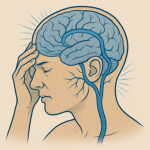
Cerebral venous outflow disorders describes a spectrum of conditions related to issues with how fluid drains from the brain.Experts are observing a connection between connective tissue disorders (like hypermobile EDS) and cerebral venous outflow disorders. Cerebral venous outflow disorders can cause pressure headaches (that often worsen when lying flat), dizziness, pulsatile tinnitus (a rare vascular form of tinnitus), neck pain, tenderness at the base of skull, vision disturbances, ‘brain fog’, and cognitive dysfunction. Cerebral venous outflow disorder may look different when it presents in individuals with connective tissue disorders than in individuals without, creating diagnostic challenges.

Living with a rare, chronic illness is profoundly isolating—not only physically, but emotionally. Even when surrounded by others, I often feel like a ghost, disconnected from the world around me. I remember sitting at a party, listening to conversations that once felt familiar, and being hit with the stark contrast between their lives and mine. […]

Ehlers-Danlos Syndrome May Increase Susceptibility to Infections
EDS, POTS and MCAS Linked by One Gene Mutation

Popular People With Ehlers-Danlos Syndrome

In memory of John Ferman, Founder and President of Chronic Pain Partners / EDS Awareness
EDS Physical Therapy Book & Free Webinar: “Living Life to the Fullest with Ehlers-Danlos Syndrome”