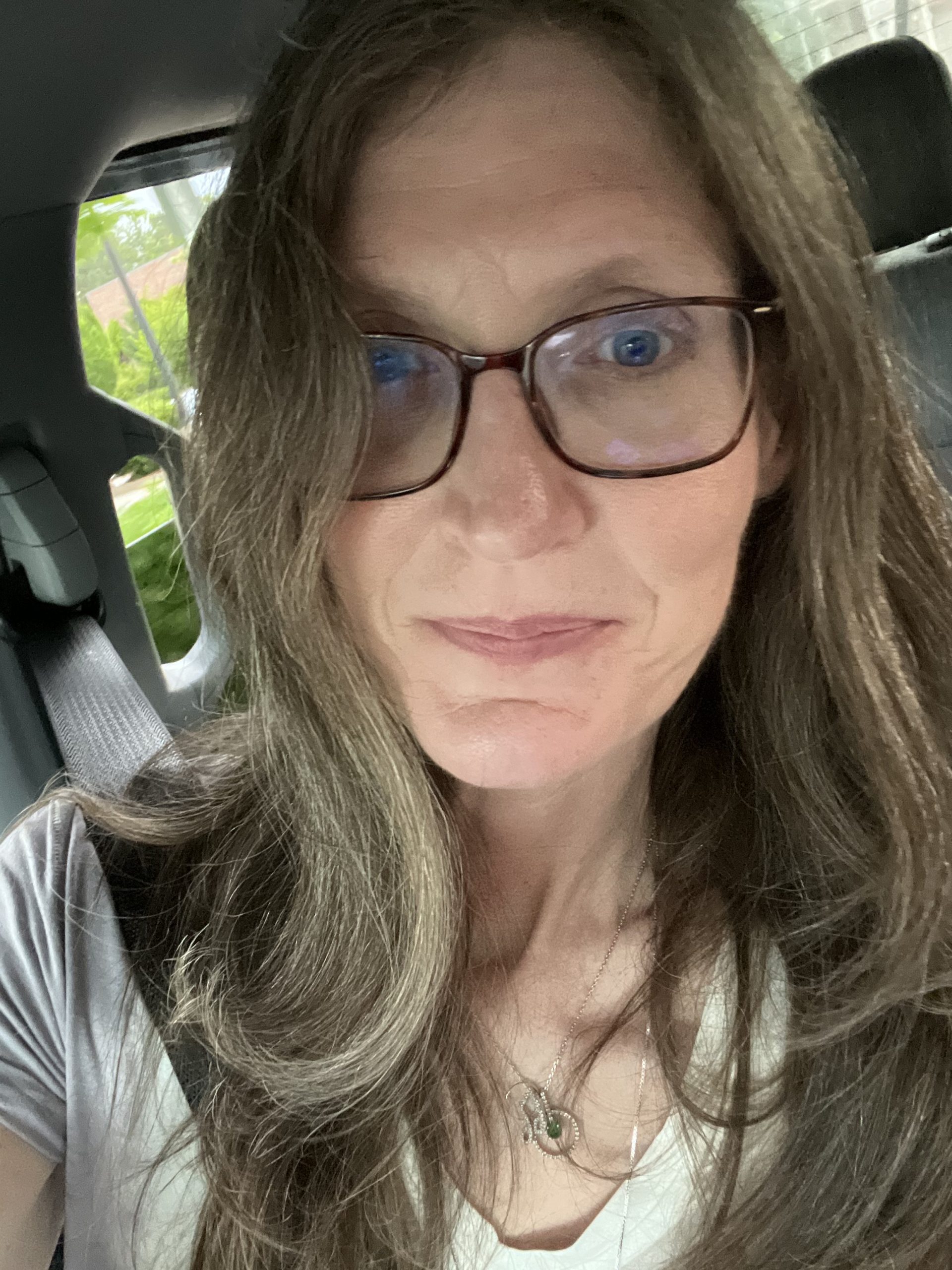
When host CHristie was not able to walk and talk in 2021, she lost the career she had built as a radio DJ. What began as a personal way to process those changes—recording short reflections on living with Ehlers-Danlos syndrome—has since grown into AWOL Zebra, a daily podcast that has reached listeners across countries. AWOL Zebra is not about polished soundbites or one-size-fits-all solutions. Instead, it offers patients a platform to share their lived experiences, frustrations, and discoveries. CHristie blends her own day-to-day reality with conversations featuring people living with EDS, medical professionals, and advocates, always aiming to make complex conditions more understandable and less isolating.
In this interview with Chronic Pain Partners’ Karina Sturm, CHristie reflects on how the podcast started, the role of community in coping with chronic illness, and why building spaces free from gaslighting and judgment is essential for people with EDS.
Karina: For readers who don’t know you yet—tell me about yourself and why you started AWOL Zebra.
CHristie: I was a radio DJ—being on air was all I ever wanted. In 2021, I suddenly lost my ability to walk and talk. I lost my job and didn’t know what was happening. I eventually discovered it was EDS and started working to get my voice and body back. Re-entering radio wasn’t realistic, so I started a podcast. Honestly, I needed someone to talk to. We figured out how to podcast, and it became a comfort. Sharing my experiences felt like medication.
Karina: How does your podcast differ from other EDS podcasts that are out there?
CHristie: My podcast is a patient’s perspective and a platform. There are lots of EDS podcasts, but many feel clinical or program-focused. I wanted a place where you can hear someone talk about pain a professional can’t quite explain, or complain about the same everyday stuff you’re dealing with. Facebook has so many rules; your post can vanish into the void. AWOL Zebra is a place for individuals to be heard.
Karina: You’ve recorded well over a hundred episodes in a short time, right?
CHristie: I started at the end of 2021 and set out to make it a daily podcast. Some episodes are 45 minutes apart—because that’s life with EDS. I’d plan an episode, then lose my voice, then come back and say, “This is a day in my life.” I wanted people to know I’m real—even when I can’t talk. There are also so many “one-size-fits-all” programs out there. I tried a lot of things that didn’t work. That made me feel even more excluded at a time when I already felt invisible and unproductive. The podcast gave people (and me) a place to know we’re not alone and learn about different therapies that may help people with EDS.
Karina: The show features both your daily life and interviews. Who do you talk to?
CHristie: Regular people with EDS; folks running programs; and practitioners. I’ve had Axel Bolin on multiple times—I do a lot with fascia—and recently interviewed someone about musical breathwork. So a large bandwidth of people come on. I try to find non-invasive approaches people might not know about and bring them to listeners: affordable things you can try at home with simple tools. I joke that I’ll “do stupid so you don’t have to”—I try things and then report on it because I’m desperate to find what helps.
Karina: What kind of impact stories have stuck with you?
CHristie: A listener once said hearing someone describe what was happening in their body finally made her family understand—“That’s my wife; that’s my mother.” Moments like that give people the confidence to go to PT and say, “I believe this is happening”. It’s about common language so we present similar issues to different doctors—and hopefully get taken seriously.
Karina: Beyond the podcast, you’ve been building community.
CHristie: Yes—it’s an open dialogue I wouldn’t otherwise have. I’ve learned about new ways to approach the body. The idea is to offer simple basics so people don’t get overwhelmed. You don’t always need a rigid protocol—sometimes you just need to get up and do a few things.
Karina: How has your health changed since you started?
CHristie: Right now is tough mentally because I want to work and make money—and running a support space alone is hard. I didn’t realize how much was wrong when I started: gastroparesis, MCAS, and more. The stress hasn’t helped, but physically I’m better: less pain, more mobility, no wheelchair, no compression garments. It’s surreal—then you worry, “Is this temporary? Is a flare coming?” I’m learning balance. It feels never-ending, but the goalposts for “better” probably need adjusting.
Karina: What’s next for AWOL Zebra?
CHristie: We’re heard in about 55 countries, which I never expected. I’d love to have an AWOL Zebra presence everywhere and to do in-person events eventually. The big goal is immediate acceptance—no gaslighting, no need to over-explain. If someone says they feel “bendy and stretchy” in a spot, we understand and try to help—virtually or by connecting them to the right person. I also want AWOL Zebra to be a platform for people with EDS who offer services—like a speech therapist who has EDS herself. We’re partnering with groups like Chronic Warriors in the UK and others to cover more needs—infusions, osteopathy, you name it—so if I can’t help, maybe Cassandra [Chronic Pain Partners has interviewed Cassandra in the past]] can. Mostly, I want to give people a place to laugh, ask questions, and feel less rigid and alone.
Karina: You’ve even kept people company during medical treatments?
CHristie: All the time. I’ll sit on video with someone through their infusion so they’re not alone. I’ve gone on virtual walks with listeners in other states—if you need to go, I’ll go, too. I’d like to make that global: early-morning virtual meetups, short stretching sessions you can join live or watch later. We didn’t ask to join this club, but we can still build normalcy and connection.
Karina: Perfect closing words. Thanks so much for the conversation!
CHristie: Thank you. I appreciate you taking the time—and everything you’re doing with Chronic Pain Partners.
Karina Sturm
September 2025