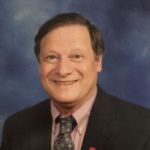
Jeevan Mann is a patient researcher, patient leader and runs an organization called Medical Inspiration, which subsidizes care for patients with EDS as well as educates medical providers on the condition. CPP‘s Karina Sturm spoke with Mann about his rare EDS type, how he became a patient researcher and the important work his organization is doing.
Karina Sturm: Hi Jeevan, so good to see you again! When did your Ehlers-Danlos journey start?
Jeevan Mann: I’ve had symptoms my entire life. I’ve been an athlete, so I’ve played almost every sport you could think of, from tennis, golf, boxing, and jujitsu. Throughout that, it became quite apparent that I was different from the other kids. I wasn’t able to build muscle as easily; I was getting injured a lot. A big part of sports in the United States, especially for men, is the saying „pain is gain.“ So whenever I complained about being in pain, they said, I needed to just man up, and that the pain is going to make me stronger. I was diagnosed with a brain tumor when I was 13. They almost did not catch it because it had such a complex presentation. After that, all eyes were on me and I had a lot of follow-ups with MRIs.
In high school, I started to have joint pain more than I used to previously have. I was playing tennis at that point – just because I developed allergies to everything in my farm town. It was a low impact sport, which was fine after my brain surgery. but my joints started hurting a lot. And then my vision would go black when I was running, And eventually, I started getting a lot worse. In my third year of high school, I was the top of my class at the time. I was doing very well as a valedictorian, but I was having a hard time remembering things, which is very uncharacteristic of me, and I couldn’t read. They thought my brain tumor was back, so my neurosurgeon revised the brain surgery. After that, he said he cannot do anything more for me but I should look further since this might be something else. I was very fortunate to have a provider as a mother – my mom’s a PA who is also very hypermobile. So my rheumatologist, who I am seeing because I also have celiac disease – sent me to a geneticist and I got diagnosed with a very rare form of EDS: AEBP1-related EDS. There are fewer than 10 people around the globe with my Type.
Karina: Now you have this super rare type of EDS. How does it make you feel to know nothing about the progression of this type?
Jeevan: That was really difficult, honestly, because I had the hEDS community for a little bit, and then, I didn’t at all. Having an extremely rare monogenic variant that hasn’t even been acknowledged by the EDS Society was hard. But I found someone via Dr. Courtney Gensemer‘s social media post. She had posted about the AEBP1 gene and how they had found a new Ehlers-Danlos syndrome with very few patients and a girl commented under it, and we started talking. When I got diagnosed, I started laughing. I honestly couldn’t believe to have such a rare gene. My mom has hEDS! We have completely different presentations and she does not share my genetic mutation. I have this privilege of having a genetic test result, which a lot of other people don‘t have.
Karina: Oh, yes! HEDS is still often doubted or seen as psychosomatic, because you don‘t have that ultimate proof of a genetic mutation. It‘s funny, because I have a very weird mutation, too. I have a TNXB mutation nobody has seen before. By accident, I found someone in a database in the United States that has the exact same mutation. And so I connected with her. It was incredible connecting with a person that has literally all my symptoms, the same presentation and shares this genetic mutation with me. Once you were diagnosed, how did you navigate the healthcare system?
Jeevan: That’s been complicated as well. Unfortunately, I have many comorbidities and grew up in a small farm town in Northern California. We didn’t have specialists, so in order to get the care that I required, I had to travel an hour and a half each way just to get to my appointments. Additionally, I have an extremely rare variant. Nobody knows how my EDS type presents. Many times, my provider and I have to figure the management out while we go.
Karina: At what point did you decide to make EDS not only part of your Identity but also your profession?
Jeevan: I have wanted to be a physician since I was a kid. When I had my brain tumor, many doctors did not believe me. They said I was just anxious and prescribed anxiety meds. Then, I had a different provider who took me seriously and went outside of the box and ordered a brain MRI. I was so grateful for her support. This was the moment I wanted to be a physician. Later, when I went through all my EDS issues, I realized, I get to sit here and feel better, because I had access to providers, surgeries, rehabilitative care, which, unfortunately, is not the standard.
When I was in my first year at UC Davis in California, I asked the EDS Institute at the Children‘s Hospital in Colorado where I was a patient if they had any research opportunities for undergrads and they said yes! I got in and since then, I have been working in a lab. I changed my career path to wanting to be a physician scientist to improve the lives of people with EDS.
Karina: What is the biggest benefit for a researcher with EDS?
Jeevan: I know the clinical presentation very well, including my variant but many others too. So I am bringing a holistic perspective. Having this patient perspective of knowing what it’s like day to day and getting these little nuances can really push forward the science because our community is very inquisitive. We naturally want to know the answers to all our symptoms.
Karina: Any exciting projects related to EDS you are currently working on?
Jeevan: In California, I am currently working with a lab who specializes in tissue characterization. They have developed technology that is currently in use in their clinic that may be able to objectively characterize connective tissue and serve as a diagnostic marker/prognostic tool. I am currently working with them to try to help them break into the EDS field, including raising awareness and funding to do this study. I already wrote a grant with them, and have a few presentations we’ve given.
I really believe it could be impactful, and if it is done, they have the ability to teach the medical students how to use it through their school system. I think it could really push the field forward and give an opportunity for clinical trials to start. The school also has one of the top translational institutes in the entire country which has some extremely impressive clinical trials.
Karina: After becoming a researcher, you also started an organization. What is your organization about?
Jeevan: Resources were the only reason I got diagnosed, but those are not available to all people. Getting care in the US is extremely expensive and we have to spend a lot of money out-of-pocket, because insurance only covers half of the treatments we need. The cost of managing EDS is a large barrier for many patients. We wanted to address this challenge on a micro social level by subsidizing care for patients. This is only our second full year as an organization. Last year, we ran a pilot where we subsized 30 percent of patients‘ care they would otherwise not being able to afford. We just got the results back and our patients were elated. At the same time, we’re transitioning into educational space, because we still don‘t have enough providers that know about EDS.
Karina: What’s the plan with your organization? Where do you want to go from here?
Jeevan: While I love subsidizing care, it’s not something that’s necessarily scalable. And it becomes really difficult because you need to provide a lot of documentation.
I want to go really hard on the educational side of things. I want to get into the medical schools and teach these doctors while they’re in their training phases, that this is not a rare disease. We have a lot of people on the board of our nonprofit that work in primary care clinics. And we have plans to teach primary care providers to identify EDS earlier before patients are even having concrete symptoms.
Karina: What do you think is the most misunderstood part about EDS? And how would we solve that?
Jeevan: I think it all comes down to prevalence. We don‘t have genetic testing, because we don‘t have many laboratories that study EDS. We don‘t have laboratories because we don‘t understand the prevalence of the disease, so they are not assigning more positions to specialize in this. Comparatively, we’ve done a fantastic job of advocacy in this space. More than ever, Ehlers-Danlos Syndrome is something that is known. That was not the case five years ago.
Karina: I agree! Thanks so much for being here, Jeevan.
Jeevan: Thanks!
Karina Sturm
January 16, 2026