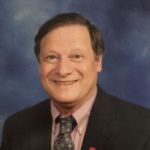
In this episode, Cassandra and Marcia speak with Jan Groh, fellow EDSer, advocate, creator of the Oh Twist blog and co-author of the EDS Toolkit.
Listen to Episode 3:
Transcript:
Marcia
You’re listening to the EDS Unplugged podcast, brought to you by Chronic Pain Partners, a nonprofit supporting the Ehlers-Danlos Syndrome community. Welcome back to EDS Unplugged. I’m Marcia Brock.
Cassandra
And I’m Cassandra A Campbell.
Cassandra
We’re excited to be joined by Jan Groh, fellow EDSer author, founder of the Oh Twist blog, and website advocate.
Cassandra
Jan does fantastic work in the community, which shines the light on the complexities and challenges of living with EDS and its many associated symptoms and conditions. Jan, welcome to EDS Unplugged.
Jan
Thank you. I’m really glad to be here. It’s nice to meet you both and get to join you.
Marcia
Thank you for joining us. For anyone hearing about you for the first time, Jan, what drew you to advocacy for the EDS community?
Jan
Well, like so many people with any of the forms of Ehlers-Danlos Syndrome, but especially in my case, the hypermobile type. I’m the youngest of two children in a small family, and my parents are both gone. I’m the first in my family to get diagnosed.
I’m 58 at this time, and I had a host of issues since childhood, even starting in infancy that we never could quite figure out. I had all those odd growing pains and things that couldn’t be explained. It was more than growing pain. Nothing ever showed on scans.
The closest I came to diagnosis of anything was in 1993 after college. I was almost diagnosed with Fibromyalgia. I was one point shy for that. So they diagnosed me with Chronic Fatigue and Immune Dysfunction Syndrome.
But when I attended that support group, those people were so, so, so much worse than I. They were so beset. They had barely been out of their houses for months, sometimes years. And I would get tired, but only for a couple of days at a time. So I got on with life in fits and starts, did my best, and ended up self-employed as an Access Database Programmer.
Jan
And in 2011, I started to get weaker. I was 44 then, and I had no idea what was going on. I had heard of hypermobility from my massage therapist who suspected it when I got worse from some physical therapy for a back injury. So I had heard of hypermobility syndrome at that point, but not Ehlers-Danlos.
I got into an email group who pointed me to Facebook, and I almost left Facebook right before this happened. And I’m so glad they pointed me to a Facebook group that taught me about Ehlers-Danlos Syndrome just in time to go from walking to wheelchair in three weeks in January of 2012 at almost 45 years old. Blew all of our hair back.
My doctor, my family sat up and listened. I’d had him for 15 years. He kept dismissing everything. Nothing showed on scans. Got to a geneticist, did a full, thorough personal and family history and work up. We ruled out kifoscoliotic and vascular EDS. And so at that time in 2012, I passed the criteria for hypermobile EDS. We had ruled out those two rare types, and I’m glad I don’t have those.
And so I landed in a wheelchair and I stumbled on the Oregon Ehlers-Danlos Syndrome Support Group. It was a tiny little group at the time and not meeting very often. I foolishly asked, “would you guys consider meeting more often?” And they said, “sure, if you want to organise it”. And that’s my wheelhouse, it turns out.
I’m really good at organising things and speaking and whatnot. I ended up leading the Oregon EDS group for a year, ending with an international scale conference for Ehlers-Danlos Syndrome Awareness Month, May of 2013. I tend to go big or go home. And that was with no budget. So in the process, I ended up meeting so many people in person as a support group leader. So not only did I have my own embodied experience of this condition, I met all kinds of other people and got to see and touch and observe people in real life and learn about so many co-occurring conditions. And I stopped leading the group in 2013 and started my blog at that time because I then figured out, ‘I think that’s why I’m so tired’. So my domain name, Oh Twist .com, is an acronym for Oh That’s Why I‘m So Tired. Finally, I had some answers.
Cassandra
Marcia and I can definitely identify with the journey of diagnosis. I don’t know if you’ve had a chance to get our book yet. Have you had a chance to get our book BrOKen yet?
Jan
I have not. I’m so sorry.
Cassandra
Okay, some time in the future. That’s all right.
Jan
Yes, it’s on my list.
Cassandra
That’s all right. It’s all good.
But yeah, that’s something we speak about in the book. Our journey to diagnosis; for me, it was 20 years from the onset of symptoms. So yeah, we definitely get that whole process of not knowing what’s going on and then being diagnosed. It’s like, ‘Oh, that explains it’. That can be really massive.
If it’s okay with you, I’d like to start off and dive into the EDS Toolkit, which you co-authored with a number of great people and physicians, one of them being Dr. Emma Reinhold, who was actually a guest on our book launch back in 2020.
Jan
Oh, wonderful.
Cassandra
I’ve looked at the EDS Toolkit, and it’s a brilliant resource for patients and doctors. I even recommended it to a GP myself. I don’t know if he read it or not, but I did recommend it, and it sounded like he was interested.
Jan
We hope he’s interested.
Cassandra
Let’s hope so, yeah. I’ve mentioned it to a few, and he’s the only one who showed any interest, so I don’t know.
Anyway, tell us about the EDS Toolkit, how the project came to life, and how you hope it changes the experience for patients and professionals.
Jan
Well, so I ended up on Twitter. I still call it Twitter. It’s now known as X, but I will lapse and call this Twitter. Under my Oh Twist handle. And I would tweet a mix of both scientific papers, the latest research and things that were very validating, as well as I have pithy blog posts, including my opinions about how I don’t believe that at least the hypermobile type, it’s not rare, in my opinion, not at all. And among other things, and how all doctors have seen EDS patients, whether they know it or not, because I believe we are the frequent fliers in their offices. And my Twitter stream caught the attention of Dr. Emma Reinfold and to my surprise, she reached out on Twitter and tapped me to join the group of people, including several doctors, who drafted and created the EDS toolkit for doctors. And she was the spearhead.
She was inspired to do this because I believe it was the Royal College of London that was hosting toolkits at that time. She realised this could be a really powerful tool for the GPs over there, but for doctors everywhere, frankly, to ease that burden of trying to help recognise the condition, to suspect it quickly, to then also more quickly and easily diagnose people, especially if they really seemed to have just the hypermobile type of EDS at that time.
This was in 2017, after the Ehlers-Danlos Society had put forth the new diagnostic criteria and the new category of Hypermobility Spectrum Disorders. So I ended up in an email group with people like Dr. Hakim and Dr. Castori and Dr. Reinhold and others.
It was just like any group exercise. We came to a consensus around the ideas, like her JUST GAPE acronym. It’s like a mnemonic. Doctors get a lot of mnemonics in medical school to help remember either diagnostic processes or illnesses and whatnot. So we got it published with the Royal College of London, I believe, but it became a political hot potato because EDS is a political hot potato in the medical world, as you may know, not all doctors agree about it.
Some doctors think it’s still extremely rare and almost nobody has it. And, oh, don’t talk about that. You’re wrong or this or that. And others felt that the diagnosis criteria that exist right now are not valid. So for a variety of reasons, it became too politically hot for them to host. So we became homeless for a minute. I think it was around 2019 or 2020. But then the Ehlers-Danlos UK group, the one that ends in .org .o.r.g as opposed to TEDs, which is .com, kindly took us on and are now hosting the toolkit. The domain name is gptoolkit.ehlers-danlos.org. The key is the .org at the end. Don’t put .com by accident.
Cassandra
That’s where I found out about it, from Ehlers-Danlos UK.
Jan
Okay. Yeah, we’re very grateful to them for picking it up and housing it and hosting us because it’s been a powerful tool and it’s freely available to anyone in the world. You don’t have to be a doctor to access it. Patients can access it and do share it with your doctors. It’s meant to help make that process easier.
Marcia
I can remember the toolkit coming out and I can remember the hot potato in regards to hosting.
From doing the toolkit, what was your experience or the biggest challenges that you had with it? Were there any others?
Jan
So after we published it, we did get some really valid critique and pushback from the rare community. And by that, I mean folks who have the more rare types of Ehlers-Danlos Syndrome. I’m actually best friends with someone who, she and her son are the only two people with their known SNP. I helped them leave no stone unturned and get diagnosed years ago.
And people with the rare types rightly pushed back and said, “hey, you’re making it almost too easy to diagnose the hypermobile type of EDS and the HSDs”, the hypermobility spectrum disorders.
And so, some of us who may have the rare types may be getting slotted into that bin and it’s expanding the pool of hypermobile type people, when indeed, some people may indeed have either a rare type of EDS or another connective tissue disorder such as Marfan Syndrome… Osteogenesis Imperfeca, is a big one.
The parents often look like they have EDS, and it’s not until the children start breaking their bones and almost get medically kidnapped, that they discover they have Osteogenesis Imperfecta. It’s very traumatising. So that was a very valid critique. And I see that Emma and others have updated the toolkit a little bit to try to help to suspect some of the more rare types.
But considering that there’s 13 now and counting, thank you to the scientists who continue to uncover more, that’s an awful lot for doctors to sort through. So I think that’s one of our only weak points. And it’s a weak point worldwide in general in EDS diagnosis, because I know, at least in Europe, I heard at a scientific symposium just a month ago that they tend to guard their geneticists tightly. They gatekeep them. And you can’t see a geneticist very easily. You have to really strongly suspect something that’s worthy of being pushed up to a geneticist.
I believe that’s why Dr. Reinhold hatched this GP toolkit to help the GPs start to diagnose. But that means those GPs have to know about all those 13 types of EDS and the additional four or five other connective tissue disorders. So that’s kind of our only weak point, and that’s a weak point even without the toolkit in general. Whoever is trying to diagnose you has to know to do proper differential diagnosis of over 18 different connective tissue disorders. That’s a lot for anybody, even the most sympathetic doctor. They’re just so busy. It’s hard for them to keep up and know all these things.
I’m hoping we can come up with something, an app or something that might make that easier because I don’t fault any doctors for not knowing about all these rare types of EDS, plus all the other related connective tissue disorders. That’s where we’re falling down.
Cassandra
I totally agree with hypermobile EDS not being rare. Everybody just sort of lumps EDS into one thing and I guess what frustrates me, I mean, I’m very glad and fortunate that I have the hypermobile type and I don’t have a life-threatening type, but it frustrates me that it’s the only one that they haven’t found the cause. I know that there’s been some work, some development in the scientific area around that, but that does frustrate me because why that one, which is the most common one?
Jan
I know. Well, and it’s not for lack of effort, as you know.
Teams like the Norris Lab at the Medical University of South Carolina, if I say, MUSC, M-U-S-C, that’s what that refers to. They uncovered a Kallikrein gene over a year ago and finally got that published, but it still only explains two families.
The HEDGE Study run by TEDS, the Ehlers-Danlos Society hasn’t come up with a distinctive finding yet. I personally feel that hypermobile EDS and the HSDs, first of all, I think HSD is just the male phenotype of HEDs. Personally, I’ll bet dark chocolate on it, but maybe I’ll be proven wrong. But I think it’s the same animal, it’s just a different presentation of it. And then second of all, I think it’s polygenic, and I don’t think we’re going to find one SNP to find them all and in the darkness, find them to misquote the Lord of the Rings.
They’ll keep peeling off occasional SNPs, like the Kallikrein gene finding, and a Polish team found a gene a couple of years ago as well. They’ll keep peeling off ones and twos here and there. But none of those are going to explain the whole pool of us with hypermobile EDS and hypermobility spectrum disorders.
So we have to think broader. And I’m excited by the blood protein finding by an Italian team back in 2024 that found a marker. And it was very distinct. It was only in the blood of hypermobile EDS patients and HSD patients, not in the blood of classical EDS patients or vascular EDS patients or the controls or people with osteoarthritis or rheumatoid arthritis. It was a distinct 250 kilodalton, that’s a size, fibronectrin fragment found in the blood. And so they’re scrambling to replicate that finding, do a broader, bigger study to help validate it, and then hopefully bring it to market. That finding to me, says clearly there is something going on in our connective tissue. We don’t know what. And it’s not necessarily a genetic collagen defect. It may be multiple defects, not all just involving collagen. It involves other elements of the connective tissue and our extracellular matrix. But to have that blood marker, that’s exciting to me. I’m holding my breath waiting for them to succeed in the next step.
Cassandra
I know Marcia is on a mission to find a cure, aren’t you?
Marcia
Yeah. Obviously, you need to find, maybe the marker gene to be able to help to then find a cure, but still want to find a cure even without it. Yeah.
Jan
Of course, if only, because so much pain. We’re just all in so, so, so much pain.
Marcia
Do you ever find that people who identify with both, they cross over with variants at all?
Jan
You mean rare variants?
Marcia
Yeah, the rarer variants. Out of the 13, do they have one as well as six out of the variants?
Jan
Oh, right. So yes, it’s not common, but it is possible because you have two parents. And the scientists are very keen on pointing out that if your parent has, say, vascular EDS, then you’re going to get vascular EDS. But what if your other parent has either Marfan Syndrome or Arthrochalasic? It’s rare. It’s not a common matchup, but it is possible. I’m not sure if Arthrochalasic is autosomal recessive. I might be misspeaking scientifically. I’m sure some pedantic scientific types out there may correct me, but it is possible.
When I led my conference in 2013, Dr. Byers from University of Washington, who discovered the vascular gene, he actually asked the room, “does anybody have more than one type of EDS and who’s been actually been officially diagnosed?” And about three people raised their hand, and he challenged them, but they had been actually fully diagnosed. The science run, the tests actually, assays run. They were fully diagnosed. I think one had vascular EDS and Marfan Syndrome, both, or I forget what. But anyway, it is possible, but it’s not common, and you probably can’t have more than two types, only because I’m not sure the foetus would be viable.
Marcia
I know my daughter, initially, they thought she had Marfan. She has hypermobile EDS as well. But initially, they thought she had Marfans, just because of how she presented with her height and stuff like that.
Jan
Sure.
Cassandra
When I got the official confirmation from Professor Grahame, he said that I have slight Marfan Syndrome as well as a hypermobile EDS, but not to a massive extent, just small signs of it. I don’t know that much about it, to be honest, and my brain can’t really recall exactly what he said, but he was talking about the shape of my teeth and my jaw. So yeah, it’s there, but just a little bit. I’ve not done much research on it. I think for me, I just need to just get on with it, because if I dive too deeply, then I really am gonna go down several rabbit holes that my brain just cannot manage at the moment.
Jan
I keep going down rabbit holes, and I keep finding more rabbit holes attached. It has not ended.
Cassandra
Yeah, I can imagine. And that’s why I’ve sort of stopped myself at a certain point, because I know me, I will go so deep that life will just pass me by. That’s what I’m like. So I’m like, yeah, okay, there’s a cut off point there. Just look at what’s out there. Look at other people’s research and just do it that way.
Jan
And enjoy your life a little bit. Yeah, that’s okay. The rest of us could do the deep dives.
Cassandra
Thank you Jan, thank you (both laugh). So were there any “aha” moments? Were there any surprises, things that you learned that you didn’t know before when you were doing the toolkit?
Marcia
Also, with the neurodiversity as well, because I know you said it comes hand in hand for a lot.
Jan
We’re finding it co-occurring. So I would say I didn’t have many surprises when we were generating the toolkit so much. But to Marcia’s point, in my journey becoming a support group later, first for the Oregon EDS group, and then later for the Pacific Northwest chapter of, it used to be the Mastocytosis Society, it’s now the Mast Cell Diseases Society. Their acronym is still TMS. I led meetings all the way from BC, Canada, down to Southern Oregon, which is a huge geographic range. And again, I was meeting patients in person.
And when I first fell down the EDS rabbit hole in 2012, the first co-occurring condition I uncovered was Mast Cell Activation Syndrome and I remember sitting one night, flushing and with hives and reacting to alcohol because, it was drinking a nightcap because my upstairs neighbour had rudely wakened me, dropping what sounded like a bowling ball on the wood floor above me at 3: 00 AM. I had just gotten to sleep. I was in pain. And I’m like, “No, you just woke me up. Oh, my gosh.” So I’m sitting there and I’m like, I can’t sleep. I might as well read.
And I kept seeing mention of Mast Cell Activation and Mastocytosis. So I fell down that rabbit hole that night and ended up attending that year’s conference the following week. It turned out to, by coincidence, be not far from me up in Seattle, Washington or Bellevue, Washington. And a friend helped me get up there, so I did that deep dive next. And as I would talk to patients in the EDS groups, everybody had laundry lists of medication sensitivities and allergies, other chemical sensitivities and allergies, sensitive to sun, sensitive to vibration, to being startled, to stress. And so I was like, “you all, I think a lot of us have this mast cell activation happening.”
And then as I slowly dive down, people were starting to talk about something called the Trifecta, and that would be the co-occurring Trifecta of a form of EDS or HSD, a form of mast cell disease, whether mastocytosis or mast, quote, just mast cell activation. Actually, mast cell activation syndrome is quite debilitating, and it’s one of my worst symptoms. And then dysautonomia, which I personally, again, non-scientific but unprofessionally believe, is the love child of a combination of your weak connective tissues, floppy valves, weak veins, bulging, and low blood volume, and lack of innervation, combined with and exacerbated by the mast cell activation, because I’ve noticed most of us get POTSy when we’re having a mast cell flare.
And there’s other forms of dysautonomia. I’m going to be really clear that POTS is just one form. It’s fairly common in the EDS community, but it’s not everybody has that. And my friend that I mentioned that has her own rare SNP, she and her son have something called Familial Dysautonomia, which is not just POTS in the family – also called Riley-Day Syndrome. It’s genetic, it’s inherited, and they literally lack innervation throughout their body. They literally don’t feel their bodies. And so they don’t feel pain as much as I do or normal people do. But they also don’t feel things like low blood pressure, low oxygen, heart rate, et cetera. They don’t have the normal reflexes. So they literally lack the nerves to run their bodies properly. And I joke that I got their dendrites, which are the nerve endings, like I got too many. I feel everything. I’m like, you can have them back. I would love to share some of my dendrites with them.
So that was the Trifecta that came out. And then as I was leading these meetings for the Mast Cell Disease Society, and as I was meeting up with folks, everybody had within their families, not one patient necessarily, but they or their children or their parents or aunts, uncles, spouses, cousins, whatever were autistic.
I noticed the following pattern, and that was we got sick really easily and often. So we all seemed to have weak immune systems. Some people even got diagnosed with Common Variable Immune Disease. There’s a D, I think it’s disease or disorder. Not to be confused with COVID, which has the O in it, but C-V-I-D. It’s a form of primary immunodeficiency. And this rang true in my family and in my life. I’m not diagnosed with it, but we got sick really easily and often and with things that other people tended to ward off.
Then the next thing I noticed was there was a lot of co-occurring autoimmune disease. I want to make clear, EDS itself does not cause autoimmune disease, and it is not an autoimmune disease. It just commonly co-occurs with autoimmune diseases.
I’ve noticed that people will often get that autoimmune disease diagnosed first because most of the rheumatologists I’ve heard of, both in the US and the UK, they’re very quick and happy to diagnose MS, Lupus, Sjögren’s, and you name it, any of the autoimmune diseases, because there’s markers for those, there’s tests for those, they’re relatively easy to diagnose, so to speak.
But then those mask the hypermobile EDS that somebody may have. So it ends up helping to delay the diagnosis of EDS, whether hypermobile or even a rare type sometimes because they say, “Oh, you have RA, you have Lupus, you have Sjögren’s, you have whatever. And some people have even two and three, and four autoimmune diseases, and that’s not an exaggeration. It’s true. Then the last thing I noticed, the last pattern I noticed was that everybody was either on, to go to your point, Marcia, everybody was either on or related to someone on the autism spectrum. And at first, I just filed that away in the back of my head. I’m like, ‘that’s interesting. Okay.’
And then people started to ask if I was autistic and I was not offended at all, but I was curious. I thought ‘ha, I wonder’. And so I started to do a slow deep dive into autism because this is a lot to be tracking. As you can imagine, I’m juggling EDS, mast cell, dysautonomia, all these things. And I slowly fell down the autism rabbit hole. And it’s such a hard thing to get your head around. And ended up on autistic Twitter and slowly absorbing and understanding.
I finally got diagnosed four years ago at the age of 54 with both autism and ADHD. I’ve noticed both are very commonly co-occurring in the community, not necessarily one-to-one, but I was hard-pressed to find anybody that I met with who did not have signs of it. Either their children were autistic or ADHD, they were married or partnered with someone, or they themselves were neurodivergent otherwise.
I’m now actually in a group of people that are trying to co-author another book about that. It’s stalled for a minute, so I don’t really want to talk about it too much because I don’t want to whet people’s appetites in case we don’t manage to get it across the finish line. All of us have had a bunch of things interrupt our lives that have waylaid it, but we’re trying to hatch a book. There’s 13 authors, co-authors on this thing, so we’re trying to work on that. I just don’t want to talk about it too much because I don’t want people to get excited until we’re crowning, so to speak.
Cassandra
Yeah, until it’s ready. No, that’s really understandable.
Just going back to saying that you only got officially diagnosed with autism and ADHD four years ago. So your whole life, you’ve just been managing all of these symptoms and whatever else has gone on for you, not knowing. It’s hard enough going years and years without having an EDS diagnosis. That’s one bit. And then you’ve got these other two that you’ve been managing all your life and didn’t have a clue.
How was that for you going from just living your life as you have and then getting that diagnosis? What was that like for you?
Jan
It’s been really validating to finally get some answers for all of my issues all my life, both the physical issues from the hypermobile EDS and the mast cell activation. Oh, my goodness, this explains so, so, so much. And then also indeed for why I am the way I am, why I think the way I think, why I behave the way I behave, and why I’ve been bullied literally since birth. Starting with my own family. My father bullied me and, you know, I’m the first in my family, my nuclear family, to get diagnosed with any of this. My sister isn’t speaking with me. She’s able, she’s fine, she thinks she has no problems. It’s all me. I’m the scapegoat. I’m the problem child, the black sheep of the family. So to finally have some answers as to why my life has been the way it was, I will not lie, it has been absolutely…it was absolutely exhausting. I was masking and passing all these years, both the physical issues and the neurodivergence, both my autism and my ADHD.
In a weird way, the fact that my father was such a…kind of an autocrat and an authoritarian parent, he turned me into a people-pleasing fawn from a very young age.
And that actually probably helped delay my diagnosis because I was masking so hard to people-please and to fawn and to get on and to get by in the workplace and in life, that is partly why it took me so long to finally get diagnosed with autism and ADHD. I had been suppressing things and masking and passing as hard as I could, but that also adds to why I am so tired.
I literally had to add that in on my blog. I realised, oh, yet another reason for my fatigue is trying to cope in the world as an autistic person.
I’m well-spoken, as you can hear, and I’ve owned my own business, I’ve owned my own home, I’ve gotten through college, I’ve, quote, “made it”. So people think, “Oh, there’s nothing wrong with her. She’s fine”. And they have no idea how absolutely furiously I am paddling beneath the surface.
I have to remind my friends now and then you only see me when I’m up. You don’t see me when I’m down. If you want to come watch me passed out in my bed, drooling, bring a book (Jan & Cassandra laughing). You don’t see me when I’m down.
So I present well. And it fools everybody.
(Cassandra & Marcia laughing)
Marcia
We’re laughing because we relate so much to that. You see me when I’m up. That is the truth.
Cassandra
People don’t realise how much energy it takes us to get through every day. Just to get out of bed and just function like a “normal” human being you know, quote-unquote.
It takes a lot of energy and also the masking takes a lot of energy. Before Marcia and I started EDS Unplugged, we were masking our whole lives and for me, not being diagnosed until I was 33, for the people close to me, I didn’t know what was wrong with me, let alone them knowing what was going on. So that whole masking thing…and I know that we still mask now sometimes, because we have things to do.
Jan
It’s reflexive and habitual. And like you said, you’ve got to get things done and in order to get by in the world and get through, you’ve got to go to the grocery store or go here, go there, go to the doctors, and you have to suppress your stims and not interrupt or edit yourself and give them the elevator pitch, which is hard for folks with ADHD. I’m the queen of tangents.
Marcia
With all what we’ve spoken about, would you say that the medical world has been slow, or is there a part that’s been ignored?
Jan
Are they overlooking something?
Marcia
Yeah. Is there a part that they’re always just missing and when they finally find it, they’re like, oh, and everything comes together? Because I was 26, you were in your 50s, Cassandra was in her 30s. Why does it take so long?
Jan
Great question. I think it’s because medicine in general, so what is taught in medical schools, is by definition outdated. I don’t know who’s in charge of what gets approved to be taught, but science takes so long. And I love science. I joke that I was raised by a feral pack of engineers, and I love the scientific method, and I’m very analytical and scientific myself in my approach to things.
Medicine is always behind, like the formal institution of medical school is always behind because science takes so long to churn. And so, where we as patients and even some doctors on social media and the internet can inform each other and cross-pollinate these ideas much faster, medical school doesn’t catch up for a long time because they have to wait for science to churn and science has to catch up.
And as one of my doctors kept saying, “the science isn’t there. The science isn’t there.” You know what? The science is never going to be there. It’s always going to lag. And in my mind, I feel like we should be more open to presumptive diagnosis or working diagnosis of things and allowing for, even if I don’t have the science for it yet, saying, “hey, yes, maybe this is true for you,” and giving the patient the support that they need around these things.
I think that we’re just beginning to uncover this cross-pollination and co-occurrence of neurodivergence and the hypermobility spectrum disorders in EDS.
Dr. Jessica Eccles just spoke about it. She has a brand new blog out. I forget the exact name. I can send it to you and we can put it in the show notes or a link or something. She just came out with her brand new blog. It’s wonderful.
She’s leading the way in uncovering the connection between the mind and the body and the interplay between the two. It’s not just two separate entities, and it doesn’t go one way. It’s not mind over body, body over mind. It’s an interplay between the two. In the hypermobile body, especially, how that can really vary. I like her phrase, “bendy bodies tend to come with bendy minds.” That’s Dr. Eccles’ phrase. I don’t want to appropriate it. I want to give proper credit to her.
She’s also a co-author with me on this book that we’re trying to hatch. So that’s my concern, is just that medicine, the institution of medicine and medical school is always lagging. But things like the project EDS Echo give me a little hope because they can disseminate ideas faster, even before medicine and medical school catches up.
Plus, the younger generations of doctors and scientists are all savvy with the internet. They grew up with the internet. And so they realise and recognise that ideas are spreading faster than science may keep up. I’m not saying don’t do science. Please do science. Keep the science turning. Just be aware it will always lag and the science will never be there fast enough for we, the patients. So please don’t not treat us in the meantime. Please support us and treat us in the meantime. If it walks like a duck, quacks like a duck, and I like to say suffers like a duck, treat it as a duck.
Cassandra
What is EDS echo?
Jan
Oh, Project EDS Echo, ECHO. The ECHO programme was produced by, I forget who hatched it. It first started as a way to disseminate information about diabetes. There was a Diabetes ECHO initially, and what it did was it allows for doctors in distant areas all over the world, literally, anywhere that has internet access to hop on and hear case studies and cuss and discuss case studies. And so the Ehlers-Danlos Society caught on and they hatched a project, EDS ECHO that does the same thing.
And they’re volunteering. The doctors who lead this are volunteering, which is really generous. And they’ll get on and have these, basically like a Zoom call, and any doctor that’s willing can hop on and hear case studies or hear from their colleagues. They can bring a case to the call and ask and inquire like, “hey, I have this patient that has all these issues. They’ve got flat feet and hernias and this and that.” It’s like a live discussion for them.
This is helping to disseminate both the formal information, the actual diagnostic criteria that we currently are following, as well as just literally having a chat with their fellow doctors about the different cases and how they present and helping to suspect and then to support, to diagnose and to support these patients.
So it’s helping to disseminate the information around the world to doctors who are already baked in. They graduated recently or years ago. Why would they go back to learn about this unless they had a need to? And this gives them an avenue to do that. And I’m really thrilled to see it.
Cassandra
Oh, fantastic. Thank you for that. How do you think for people living with EDS, if they understand the connection between EDS and neurodiversity, how do you think that can help them to navigate life and get better care from medical professionals?
Jan
Great question. I think knowing all that you’re working with helps you to self-advocate better. So for instance, I am still just beginning to accommodate my own autism. I’m starting to finally notice that my pain levels are rising, I’m getting hot, for instance, from a mast cell activation thing or somebody’s cigarette or scent or something is setting me off. And in the past, I would have just tried to press through and ignore and suppress all these things, and it would have led to me having a mast cell episode, perhaps, or a meltdown.
You learn to self-advocate better. You might set better boundaries, and you feel validated. You also have the validation from being in a group of other people who understand and can relate to you and give you some ideas and tools for self-advocating. And also just understanding why I feel this way, why do I hurt so much, or why can’t I feel this or that or the other, as in my friend’s case. You’re not crazy, you’re not crazy. You’re not losing your mind, just your body. And there’s very valid reasons for why you are the way you are. It’s just so very validating.
And if you can start to accept and love and accommodate yourself, you will fare better in the world and go farther.
Marcia
I recently had a fizzy drink, never had it before, a new fizzy drink that came out. Instantly my tongue started to burn. Previously, without understanding mast cell activation, I would have not really noticed that. So listening to you say where you said the smoke or the scent or for me, it’s always like some taste or something that triggers me. I was able to flush myself very quickly.
So I’m like, okay, yeah, I’m getting that. I understand what you meant with that. Definitely, you can advocate for yourself quicker.
Jan
Exactly.
Marcia
And just notice the signs quicker.
Jan
Yeah. When I was leading the EDS support groups, I would get a lot of pushback from people saying, “oh, I don’t have that mast cell thing.” And I’m like, “oh, I wish you would recognise it because your quality of life can improve when you start to realise what’s driving and vice versa.”
In the mast cell groups, I had people saying, “oh, I don’t have what you have.” I was still using a wheelchair or crutch at the time, and maybe they were a bit ableist and like, “oh, I don’t have what you have.” But they’d be waving a flying bird hand sign. They were showing their hypermobility, crooked teeth, nearsighted, visible veins, and complaining of hernia, forcitus, and bad knees, and you name it. I’m like, Okay, that’s fine. But your life could be better if you did address this other side of the equation.
Cassandra
Just having that understanding, because I started suffering with what was diagnosed as Urticaria when I was around 10. Lips would swell up, eyes would swell up, welts everywhere, hives, crazy itching until I wanted to scratch my skin off. I didn’t want to go to school. It was absolutely horrible.
Jan
Miserable.
Cassandra
It lessened in my 20s, came back again in my 30s, lessened again, came back again a few years ago. And now I understand MCAS and EDS. I actually reached out to Dr. Emma Reinhold when I put two and two together to say, “do you think this is MCAS?” And she was like, “yep, without a doubt.” (Jan laughs) I tried to get an official diagnosis.
Cassandra
I was referred by my…
Jan
That’s hard.
Cassandra
Oh, my gosh. I was referred by my GP to this department, to erm, I can’t even think of the departments now. You know what I’m talking about.
Jan
Probably allergy, immunology.
Marcia
Allergy.
Cassandra
…another one. And, Oh, we don’t diagnose that. Oh, you’ve got to go to this department. Oh, we don’t diagnose that. You’ve got to go to this department. I’ve given up.
Jan
It’s a hot potato.
Cassandra
I just can’t. I haven’t got the energy. I’m just trying to deal with it myself and monitor when I get the hives and the rashes and things like that and monitor my food and that. It’s a lot, but it’s so difficult just to get confirmation ofwhat’s going on.
Marcia
I feel like with Ehlers-Danlos Syndrome, even when you do get diagnosed, there is literally not much..you may get a pain clinic referral. What’s that Middlesex hospital?
Cassandra
Stanmore.
Marcia
Where you get three weeks inside a unit, where they teach you how to live with EDS. Not that we ain’t been living with it forever.
Cassandra
How many decades, yeah.
Jan
To live with it, maybe live better with it.
Marcia
Getting diagnosed is like one tick box, but then there’s all these tick boxes that we have no answers to.
Cassandra
Because it’s like you get the diagnosis and then it’s like, okay, then what? And you’re just really left to your own devices.
Marcia
Without connecting with people who have it too. There’s literally not much else they do for you.
Cassandra
Nothing. You’ll be totally lost.
Jan
The worst thing I’ve ever heard is when doctors say, Oh, there’s nothing we can do for that. That is not true. That is absolutely not true. There is a tonne we can do for it, and we can improve people’s quality of life.
I serve my local houseless population. Under my own steam, I just care about them. I highly suspect a majority of them are both neurodivergent and hypermobile. I can’t diagnose folks, but I’ve talked to so many and they complain of so many of the same issues, but we just dismiss them.
Cassandra
It could be so soul-destroying. We’re fortunate to have people like you, Jan, and have the CPP and other organisations that do this work and are on social media and enlighten people so that we can get some kind understanding of what is going on with our bodies, because otherwise, we just wouldn’t have a clue. We just wouldn’t have a clue.
Jan
Yeah. Really a shame. And I’m grateful that the Ehlers-Danlos Society and so many people are working hard to try to change that and I’m happy to do what little I can.
Cassandra
Well, you clearly do so much; blogging, advocacy, writing, living with EDS, and more. So how do you protect your peace, manage your symptoms, and just keep your energy aligned? How do you keep going?
Jan
That’s another good question. I happen to be a Reiki Seichim, Level 3. I’m attuned to Level 3 and Reiki Seichim, so that makes me a Reiki, technically a master, but I don’t care to advertise that. My Reiki Master, attuned me to that level, but I mostly just self-treat. Reiki is a form of energy work. The easiest explanation is it’s like acupuncture, but without needles. I’m laughing because my friend accidentally said noodles when she was trying to tell me that. She said, “it’s like acupuncture without noodles.” And I looked at her really funny. But without needles.
So it’s energy work. And so I self-treat with Reiki every morning because every morning when I wake up, I have no cortisol in the morning, and I have to put my ribs and shoulders back into their places from rolling over in the night onto my shoulders. And I’m in so much pain. I’m flat-lined. I have no energy. I’m foggy. My blood pressure is in the toilet. And so I slither around, go pee, take my vitamins, greet my plants, greet the day, and lay back down and lie there doing Reiki and meditating for about an hour every morning.
That has helped me to stay balanced and calm. And I know a lot of people with ADHD really resist the word meditation, but you can meditate in a lot of ways including walking and running and dancing and swimming and artwork, painting, crocheting, knitting, music. Find what feeds your soul and what gives you joy and helps you release, to stim or do whatever to release that excess energy. My friends all know, do not call me before noon.
Cassandra
Yeah, you’re like me. I don’t do mornings. I’m not interested in mornings. I need my time, my brain to start working, my body to start working. Sometimes, yeah, I get up, brush my teeth, get a hot drink, get right back in the bed. If I haven’t got to go anywhere, hospital appointments or whatever it is, give me my time.
Jan
Exactly. If I know I’m going to be going out or having to perform or whatever, I’ll I work up to that and I’ll put on my face, so to speak, and greet the day and start masking and passing and keeping everybody comfortable. But that takes that toll. And so, yes, I tend to retreat. I’m a little bit like a hermit crab. I retreat back into my shell.
Cassandra
Yeah, I hear that.
Marcia
Thank you for coming out of your shell today. (all laughing)
Jan
Thank you.
Cassandra
Yes.
Jan
My pleasure.
Marcia
We’ve discussed a lot today. Is there anything you feel like you want to make sure you cover?
Jan
No, not really. We’ve really covered the major points. And again, I just appreciate everybody out there, all the scientists and doctors who are trying so hard to wrangle this thing and not just find the SNPs and the genes and all of that. I’m glad to see from the scientific symposium this year that happened, that they’re doing really proper due diligence this time.
On the road to 2026 it’s called, by The Ehlers-Danlos Society. If I say TEDS, that’s what that stands for. And I look forward to 2026 and early 2027. They’re not going to publish until December 2026, I believe, and January 2027. So everybody be patient. Things are coming. And I was pleased to hear that they’re kicking around two things very strongly. One is they’re giving the 2017 diagnostic criteria for hypermobile EDS and the HSDs the very hairy eyeball, which is to say, that’s a euphemism for, they’re really looking at it hard, revisiting what’s in it.
I feel like those criteria were thrown together really quickly over someone’s kitchen table and not even in a scientific way at all. They literally said, “if you have an autoimmune disease, we cannot count your pain towards Ehlers-Danlos Syndrome.” Excuse me?
Cassandra
Wow.
Jan
The two are not mutually exclusive. And then also they’re revisiting, what is HSD. Is it really a separate entity from hypermobile EDS. And it’s not for sure yet. They haven’t fully decided, but they’re tossing around, considering maybe recombining those two. And I’m really, really hoping that they do.
I, again, personally think HSD, the hypermobility spectrum disorders, are just primarily the male phenotype of hypermobile EDS. I really feel strongly that that’s what that is with the occasional odds and ends tossed in. I think they really should be recombined. And we need to expand our minds around how people can present so very differently, even with the same condition.
This is true for autism, where you have people like ourselves who are well-spoken, hyperverbal in my case. We present well, we can mask and pass, as opposed to our level three brothers and sisters around the world who may not be able to use their mouthparts to speak, but they’re just as eloquent. If they can get their words out some way through assisted text and whatnot, they have an awful lot to say. They just don’t present nearly as well as we do, but they’re there and we’re all autistic.
I’m not better than them. We’re just different. And I think the same is coming true for for hypermobile EDS and the HSDs. I think that’s really the same animal, and it’s just a different phenotypic presentation.
Cassandra
Right. Yeah.
Marcia
For anybody listening, where can they find you? Where’s your blogs and to join your community?
Jan
So the best way to find me is my blog, which is ohtwist.com, which is O-H-T-W-I-S-T.com for Oh That’s Why I’m So Tired. .com. I have my Twitter and Facebook linked there. I believe I do. I hope I do. I’m on Twitter or X, as it’s now called. I had to add H-2-O in front of twist on Twitter because somebody else had the Oh Twist handle parked.
If you just look for the EDS hashtag on almost any social media, you’ll find me. I also have a Patreon blog, which is where I get a little bit of monetary support, but all of that is linked on my blog. So ohtwist.com is really probably the best.
Cassandra
Okay, great. We’ll make sure that we’ve got everything in the show notes as well. People will be able to find you everywhere (laughing). Okay.
Jan
Oh, no. (laughing)
Cassandra
Jan, thank you so much for joining us today. It’s been a real pleasure. Very insightful. Once this goes out and the listeners hear what you’ve had to say, you’re gonna get an onslaught of new followers (both laughing).
So thank you so so much. We really appreciate you making the time to come on today.
Jan
Thank you both. And thank you both for platforming me and helping to further cross-pollinate the community.
Cassandra
No problem. It’s our pleasure.
Marcia
Thank you for tuning into EDS Unplugged, the podcast. Don’t forget to subscribe and share.
Cassandra
Until next time, stay informed, stay inspired, and stay plugged in.


Funny how I finally got diagnosed autistic at age 52! The signs are so obvious in retrospect. Didn’t get my hEDS diagnosis until age 48 despite many specialists and joint issues… but a different doctor for each joint, right! We can be so off the radar…