Guest post by Jon Rodis, President of the Connective Tissue Coalition
Finding respectful, knowledgeable care can be difficult, especially for those living with complex or chronic conditions. After years of what I call “the doctor shuffle,” I discovered strategies that helped me strengthen my care and build a supportive medical team. Here are the key lessons I’ve learned over more than two decades of patient and advocacy work.
- Share Your Daily Quality of Life
Don’t stop at medical terms—tell your doctors what life looks like for you every day. Be specific about:
- Levels of pain
- Fatigue
- GI issues
- Other symptoms affecting daily living
This helps doctors see beyond lab results and understand how your condition truly impacts you.
- Use Analogies They Can Relate To
When doctors struggle to grasp the extent of your challenges, connect it to something they’ve experienced—like a severe cold or the flu. These comparisons make your struggles more relatable and harder to dismiss.
- Ask Good Doctors Who They Trust
If you find a doctor who is compassionate and understanding, ask them: “Who would you send your son or daughter to for care?” This question often leads to excellent referrals.
- Stay Focused and Organized at Appointments
Doctors often have very limited time due to scheduling and hospital protocols. Respect that reality by:
- Preparing a short, focused list of concerns related to their specialty
- Avoiding unrelated topics (e.g., don’t discuss orthopedic issues with a cardiologist unless there’s a direct connection)
This approach makes the most of each visit and builds mutual respect.
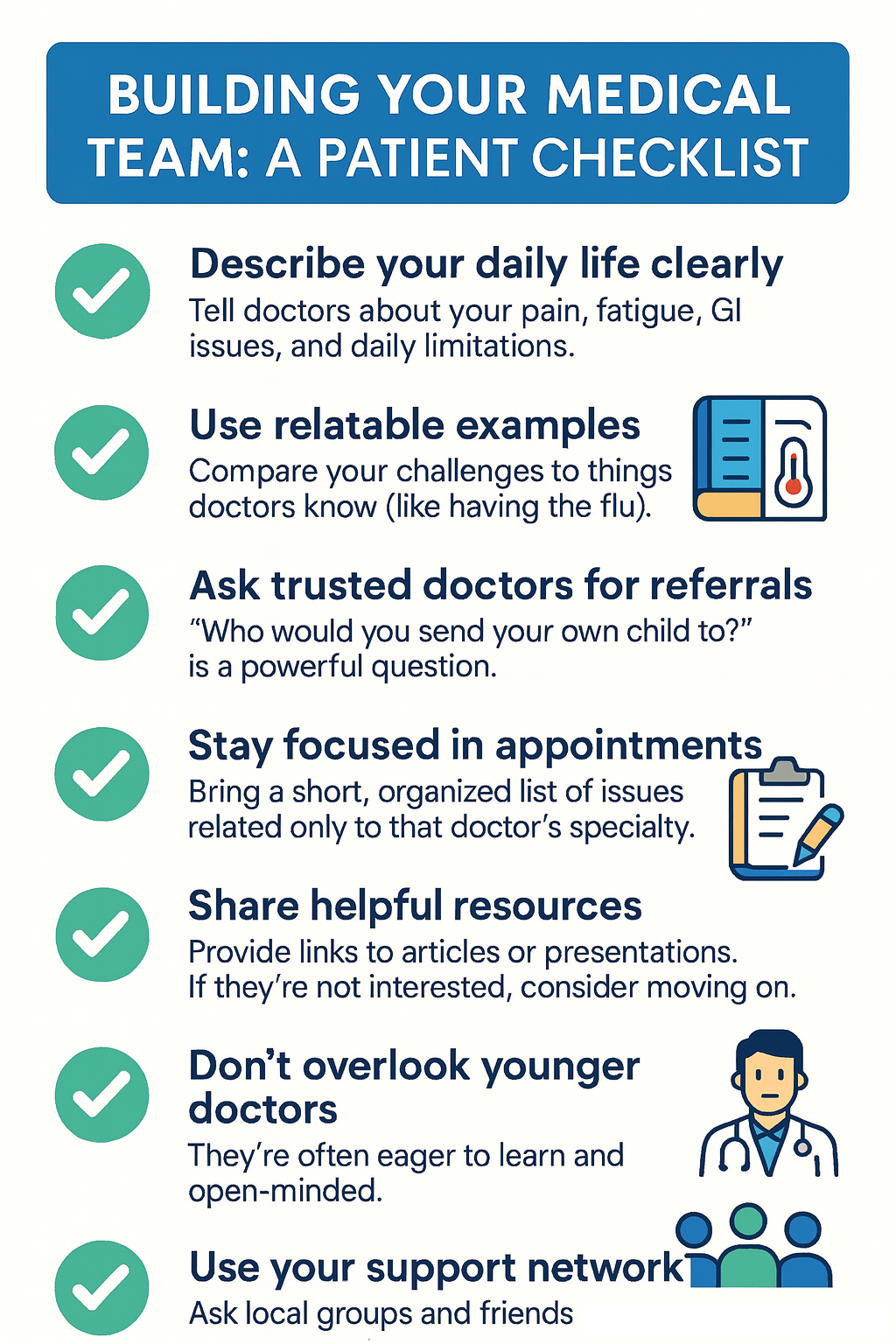
- Provide Helpful Resources
Bring direct links to articles, studies, or presentations about your condition—especially if it’s something your doctor may not know much about. Many high-quality resources are available worldwide. If a doctor refuses to review them or shows no interest in learning, it may be time to find another caregiver.
- Consider Younger Doctors
Don’t overlook younger physicians. Many are eager to learn, open-minded, and less influenced by rigid systems. They may be more willing to partner with you in your care.
- Rely on Patient Networks
Your peers are often the best source of information. Ask local support group members or friends in your state which doctors they recommend in each specialty. First-hand experiences can point you toward providers who are truly patient-centered.
These strategies have helped me build a stronger, more supportive medical team—and a better quality of life overall.
If you have questions, feel free to reach out: jrmarfan58@aol.com or jon@connectivetissuecoalition.org
Wishing you all better health days ahead!
By Jon Rodis-Connective Tissue Coalition-7/20/25