When most people think of food allergies, they picture the immediate, dramatic reactions that define IgE-mediated allergies, such as hives, swelling, and anaphylaxis. These reactions are driven by immunoglobulin E, or IgE, a type of antibody that triggers a rapid immune response upon exposure to a food allergen. But there is another category of food allergies that operates differently, can be harder to diagnose, and may be particularly relevant to people living with Ehlers-Danlos syndrome (EDS) and related hypermobility disorders.
Non-IgE mediated food allergies do not involve IgE antibodies. Instead, they are driven by other arms of the immune system, producing delayed gastrointestinal symptoms that can take hours or even days to appear after eating a trigger food. Because standard allergy testing, such as skin prick tests and blood tests for food-specific IgE, only detects IgE-mediated reactions, these conditions often go unrecognized, leaving patients without answers for symptoms they experience every day.
What Are Non-IgE Mediated Food Allergies?
Non-IgE mediated food allergies are a group of immune-mediated conditions characterized by delayed gastrointestinal symptoms triggered by specific food proteins. Unlike IgE-mediated allergies, they do not cause immediate systemic reactions associated with anaphylaxis. Instead, they produce a range of gastrointestinal symptoms, including vomiting, diarrhea, abdominal pain, reflux, and poor nutrient absorption, that can be difficult to distinguish from other conditions without careful clinical evaluation.
The three main non-IgE mediated food allergies are food protein-induced allergic proctocolitis (FPIAP), food protein-induced enteropathy (FPE), and food protein-induced enterocolitis syndrome (FPIES). FPIAP and FPE primarily affect infants, while FPIES can present across the lifespan, including in adults. Two conditions deserve particular attention in the EDS community: eosinophilic esophagitis (EoE), which involves mixed IgE and non-IgE mechanisms and causes chronic inflammation of the esophagus, and mast cell activation syndrome (MCAS), in which abnormal mast cell activation can contribute to food-related reactions through IgE-mediated or non-IgE-mediated mechanisms. What unites these conditions is that standard allergy tests may come back normal, the diagnosis often relies on thorough clinical history and response to food elimination, and treatment typically involves avoidance of identified trigger foods. For a community already accustomed to navigating complex, poorly understood conditions with limited diagnostic tools, this will sound frustratingly familiar.
Eosinophilic Esophagitis: What It Is and Why It Matters in EDS
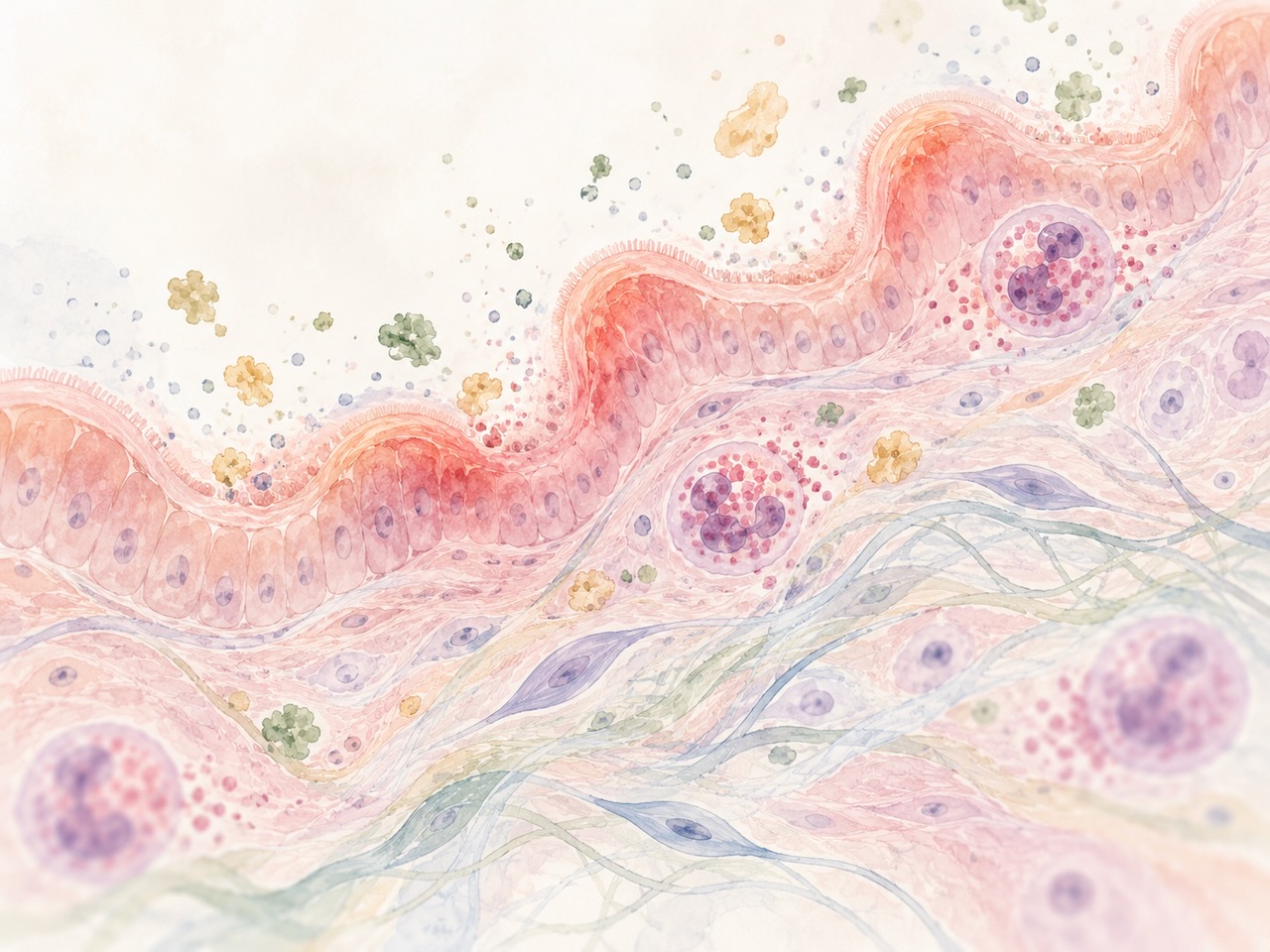
Gastrointestinal symptoms are among the most commonly reported experiences in people with hEDS and HSD, including nausea, constipation, diarrhea, reflux, and abdominal pain. While these symptoms have many potential causes, eosinophilic esophagitis (EoE) is often one that goes underrecognized and underdiagnosed in this population. EoE is a chronic inflammatory condition of the esophagus, the tube that carries food from the mouth to the stomach. In EoE, immune cells called T-cells and eosinophils accumulate in the esophageal lining in abnormally high numbers, causing inflammation, tissue damage, and over time, scarring and narrowing of the esophagus. The condition is primarily driven by immune hypersensitization to food proteins, making it closely related to, but distinct from, IgE-mediated food allergy.
Eosinophils are a type of white blood cell involved in allergy and inflammatory responses. In a healthy esophagus, they are essentially absent. In EoE, their accumulation triggers a cycle of inflammation and tissue remodeling that, if left untreated, can lead to swallowing difficulties, food impaction, and permanent structural changes to the esophagus.
The most common symptoms of EoE in adults include difficulty swallowing, food getting stuck in the throat or chest, chest pain or discomfort, and persistent reflux. In children, symptoms may present differently, including feeding difficulties, vomiting, abdominal pain, and poor growth. Importantly, EoE may not respond to standard reflux treatments, and many patients are initially misdiagnosed with gastroesophageal reflux disease, or GERD, before EoE is identified.
The Link Between EoE and Connective Tissue Disorders
The connection between EoE and connective tissue disorders, including EDS, is supported by meaningful research. A study examining over one million patient records found that people with connective tissue disorders, including EDS, Marfan syndrome, and joint hypermobility syndrome, had an eight-fold increased risk of EoE compared to the general population. That is not a modest association. It suggests a meaningful biological relationship between the two conditions.
The researchers proposed that shared molecular mechanisms may underlie this connection. In some connective tissue disorders, the signaling pathway involving a protein called TGF-β is frequently dysregulated. TGF-β plays a central role in tissue remodeling, immune regulation, and inflammatory processes, and elevated TGF-β signaling has also been implicated in EoE. The esophageal tissue of patients who had both EoE and a connective tissue disorder showed distinct patterns of gene expression compared to patients with EoE alone, including changes in a gene involved in collagen production. This suggests that the two conditions may not simply coexist by chance but may share underlying genetic drivers.
The study also found that patients with both EoE and a connective tissue disorder were more likely to have eosinophilic inflammation extending beyond the esophagus to the stomach, small intestine, and colon, a finding that may help explain, at least in part, the broader gastrointestinal burden experienced by many people with EDS.
Diagnosing EoE
EoE is diagnosed through endoscopy and biopsy, a procedure in which a thin flexible tube is passed through the mouth and into the esophagus to directly visualize the tissue and collect small samples for examination under a microscope. Standard allergy blood tests and skin prick tests are not useful for diagnosing EoE and are not recommended for this purpose.
For people with EDS who experience persistent difficulty swallowing, food getting stuck in the throat or chest, chest pain or discomfort, and persistent reflux that does not respond to acid-suppressing medications, raising the possibility of EoE with a gastroenterologist is a reasonable and well-supported step. Given the eight-fold increased risk in people with connective tissue disorders, EoE should be on the radar of both patients and their care teams. However, swallowing difficulties in EDS and HSD can be caused by other issues (such as esophageal motility disorders), underscoring the need for a thorough medical workup.
MCAS: A Brief Note
Many in the EDS community are already familiar with mast cell activation syndrome (MCAS), a condition in which mast cells (immune cells found throughout the body) become abnormally activated, releasing inflammatory mediators that can trigger a wide range of symptoms across multiple organ systems. Triggers are not limited to food and can include medications, allergens, temperature changes, exercise, fragrances, and stress.
Like EoE and other non-IgE conditions, MCAS-related food reactions do not always involve IgE antibodies and therefore may not be detected by standard allergy testing, although IgE-mediated allergy can coexist with, or contribute to, secondary MCAS. The symptom onset is highly variable, and the same food may not trigger a reaction every time, making identification of triggers particularly challenging. A low-histamine diet and avoidance of identified trigger foods are common management strategies, alongside medications that stabilize mast cells or block the effects of their mediators.
The overlap between MCAS, EoE, and non-IgE food allergies in the EDS population is an area of active research, and the relationships between these conditions are not yet fully understood. What is clear is that immune dysregulation in EDS can take many forms, and food reactions that fall outside the traditional IgE-mediated allergy framework deserve clinical attention.
Key Takeaways
- Non-IgE mediated food allergies cause delayed gastrointestinal symptoms and will not be detected by standard IgE-based allergy testing.
- People with connective tissue disorders, including EDS have an eight-fold increased risk of eosinophilic esophagitis (EoE) compared to the general population.
- EoE causes chronic esophageal inflammation driven by immune hypersensitization to food proteins and is diagnosed by endoscopy and biopsy, not allergy testing.
- Symptoms of EoE include difficulty swallowing, food getting stuck, chest discomfort, and reflux that may not respond to acid-suppressing medications.
- MCAS-related food reactions can share features with non-IgE mediated food allergies and may also fall outside the standard allergy testing framework.
- Patients with EDS experiencing unexplained gastrointestinal symptoms, particularly swallowing difficulties or reflux, should consider discussing EoE with their gastroenterologist.
Final Thoughts
For people living with EDS, navigating the gastrointestinal dimension of the condition is often one of its most challenging and least acknowledged aspects. Non-IgE mediated food allergies represent a category of immune-driven conditions that may contribute to that burden in ways that are frequently missed, because the tests most clinicians reach for first simply cannot detect them.
Understanding that these conditions exist, that they are more common in people with connective tissue disorders, and that they require specific diagnostic approaches is the first step toward getting answers. Armed with this knowledge, patients are better equipped to advocate for the right evaluations and to work with their care teams toward more accurate diagnoses and more effective management.
By Jacqueline Moltzau Anderson, PhD
Researcher at University of California
Oct, 2026
If you like what you read, please hit the like button and share!