When people think about the body systems affected by Ehlers-Danlos Syndrome (EDS), the voice box probably isn’t one of the first things that comes to mind. People with EDS often learn that connective tissue plays a role in far more parts of the body than they initially realized, and yet they may still be surprised when a new symptom turns out to have a possible connection to EDS. A raspy or changing voice might easily be attributed to a virus, overuse, allergies, or simply getting older. But could connective tissue problems also play a role? While the connection between EDS and voice problems has received little attention, emerging research suggests that it may be more significant than previously thought.
Connective Tissue in and Around the Voice Box
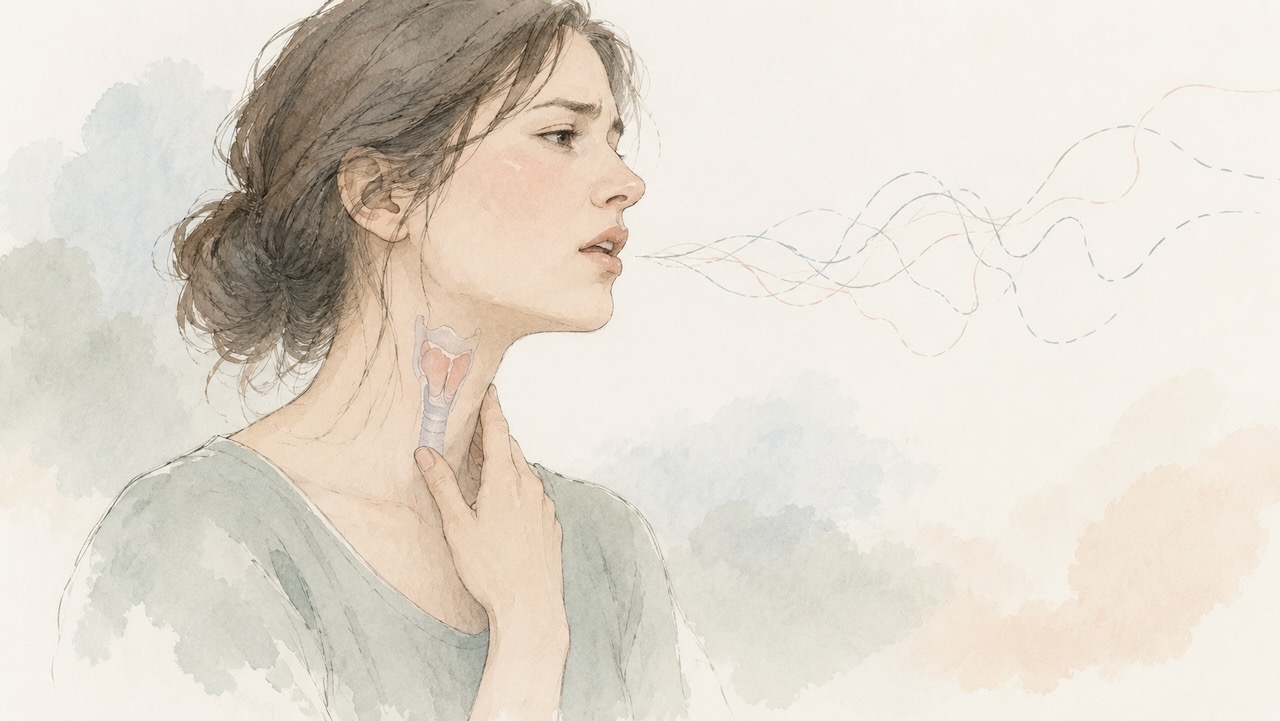
In the throat, the larynx (commonly referred to as the ‘voice box’) contains vocal folds made up of connective-tissue structures. These vocal folds come together and vibrate to produce sound as air moves out of the lungs. The vocal folds need to sit close together to produce sound. If they do not, or if there are gaps in these folds, the sound of the voice can be changed or diminished. The structures around the vocal folds are also important. These include:
- Muscles: These provide support to the vocal folds. If the vocal folds are struggling to meet, muscles can become fatigued or have to work harder than usual.
- Cartilage: This gives structure to the larynx. The epiglottis, a small leaflike flap made of cartilage, protects the windpipe (trachea) during swallowing. This area of the body also includes thyroid cartilage, which shields the front of the voice box, and cricoid cartilage, which forms a ring around its base.
- Lamina Propria: This connective tissue lies in the middle portion of the vocal folds. Its three layers help them stretch and vibrate.
- Ligaments: These form connections between the cartilage located within the larynx. Ligaments also connect the larynx to the windpipe and the hyoid bone located at the base of the chin.
Voice Issues Reported
Considering the many places where connective tissue is present in and around the voice box, it is not surprising that recent research is exploring the connection between Ehlers-Danlos Syndrome and voice concerns. In 2025, Venkatraman, Schenck, and Thibeault conducted a survey of voice issues experienced by those with EDS. The initial study included 478 adults with EDS, of whom 437 completed the survey. 400 reported that they had experienced voice symptoms in the past year. Findings included:
- About 20% of participants sought treatment from a speech-language pathologist (SLP).
- Hoarseness was experienced on a daily basis by 37% of those who saw a SLP.
- For those that were enrolled in school (322), 97% stated that their voice resulted in limitations in social interactions.
- For those employed (360), 93% experienced social limitations due to their voice.
- Over 90% of those in school or employed missed more than 4 days of school or work due to their voice.
One thing that is important to keep in mind is that individuals with voice issues might have been more likely to participate in the study than those who do not experience these symptoms. To truly get a picture of the prevalence among the EDS population, it is important to survey a larger sample of individuals with EDS. It is also important to recognize that there may be more than one explanation for vocal issues in an individual with EDS. Other concerns that could be related and investigated include:
- Reflux, which may or may not be associated with symptoms
- Allergies and/or Mast Cell Activation Syndrome (MCAS)
In a 2026 study published in the journal Biology, the researchers evaluated 13 studies from 2009-2025 exploring the connection between EDS and vocal issues. The symptoms or conditions reported in this scoping review include:
- Dysphonia:
- Changes in vocal sounds: raspiness, hoarseness, breathiness, and roughness.
- Decrease in vocal range, vocal strain, and vocal fatigue.
- Sudden loss of the ability to make vocal sounds (aphonia).
- Muscle Tension Dysphonia (MTD), also known as vocal hyperfunction.
This review also addressed structural findings in those with EDS, which included:
- Cricoarytenoid joint subluxation or fixation: The cricoarytenoid joint is a small joint in the voice box that is supported by ligaments.
- Arytenoid prolapse: Occurs when the arytenoid cartilage moves forward and partially or completely blocks the airway.
- Hyolaryngeal instability: This occurs when the hyoid bone and the larynx are not coordinating movement correctly.
- Mucosal and microvascular fragility: Tissues and vessels in the voice box are delicate and prone to injury.
Who Can Help?
There are several specialists that can be seen if you have EDS and begin to experience issues with your voice. Times to seek help include experiencing persistent hoarseness, repeated voice loss, significant vocal fatigue, new or worsening voice changes, pain with speaking, difficulty swallowing, choking episodes, or breathing difficulties. It is important not to dismiss the symptom as being caused by EDS without having the cause investigated.
- Primary Care Provider (PCP): Your PCP can help to point you in the direction of the best specialist given your specific symptoms.
- Otolaryngologist (ENT): An ENT can take a preliminary look at the vocal folds and take a detailed history of your vocal symptoms. They can also perform a videostroboscopy, which uses specialized imaging to evaluate vocal-fold vibration.
- Laryngologist: A laryngologist is also an ENT, so they can do similar tests, but these individuals specifically specialize in voice and swallowing issues.
- Speech-Language Pathologist: A speech-language pathologist can provide therapy sessions to help relax the throat muscles and provide vocal exercises.
- Other: A neurologist could be consulted if voice symptoms demonstrate a neurological basis. A gastroenterologist might be consulted if reflux is a contributing factor to voice issues. A vocal coach might be considered by those that use their voice a lot for their profession to help ensure proper breathing and muscle use.
What Can I Do at Home?
There are also things that you can do to try to preserve your voice. Adequate hydration is important in so many aspects of EDS treatment, but also for vocal fold health. Staying adequately hydrated ensures the vocal folds stay lubricated and able to vibrate smoothly. If you use your voice a lot, it is also important to take time to rest your voice. Providing vocal rest after high levels of speaking can allow time for the vocal folds to rehydrate and the muscles to relax. It is also important to address other contributing factors including allergies. No single treatment is going to work for all symptoms or for everyone.
Important Takeaways
- Connective tissue is present throughout the vocal structures.
- Tissue changes can impact the ability to make and sustain vocal sounds.
- Other causes of vocal issues should be investigated and treated.
- Seeking treatment from an EDS-aware provider helps to ensure the use of methods that protect connective tissue.
Final Thoughts
A voice problem isn’t something to be dismissed as just another EDS symptom. It is essential that the underlying cause is properly and thoroughly investigated. Hopefully there will be more research in the future on voice issues and their prevalence in EDS. Considering the significant impact that vocal problems can have on various aspects of life, receiving proper treatment is essential.
By Melissa McNulty, PhD
Professor of Nursing
Oct, 2026
If you like what you read, please hit the like button and share!